


You might not expect it, but since the year 2000, Denmark has been a real wine country. About 100 passionate winemakers work commercially in viticulture. They often use so-called hybrid grape varieties that do well in a cool climate. Thanks to these grapes and to global warming, Danish wines are getting better and better.
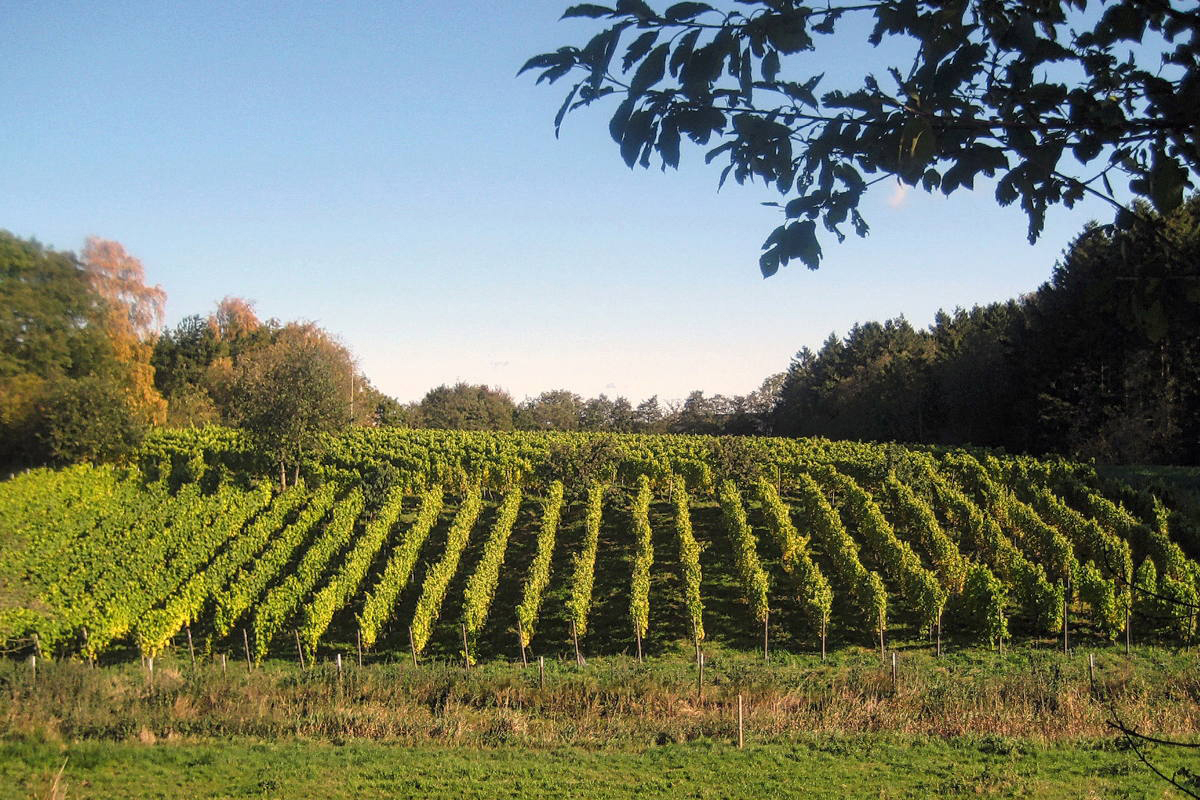
Winemaking in Denmark started in the early nineties by a group of enthusiastic amateurs. They united in 1993 in the Danish Wine Association. They put pressure on the government to have Denmark recognized by the EU as a wine country so that they could eventually turn their hobby into a job. In 2000 they succeeded: the EU recognized Denmark as a wine country. The most northerly of the entire EU.
At that time there were only two wine companies that could really operate commercially and their limited harvest was quickly sold out. The number of professional winemakers grew to around a hundred in 2020 and that number now seems to be stabilizing.
Danish vineyards are spread across the country, mainly close to the North Sea coast and on the Eastern Islands. Denmark distinguishes four protected wine-growing areas (you could call them appellations): Jutland, Funen, Zealand and Bornholm. The climate is similar to ours, close to the coast the vineyards have protection against frost in the spring.
Because Danish wine drinkers drink more red than white, winemakers initially planted mainly blue varieties. Rondo is the most popular blue variety, followed by Leon Millot, Regent, Cabernet Cortis and Bolero. But making good white (still and sparkling) wine works better in the cool Danish climate than red. Over the years, white grapes have therefore gained the upper hand, with the Solaris as the leader, which does very well in the Danish terroir. At the moment, there are about as many blue as white grapes planted.
The quality of Danish wine has been increasing for years. The climate remains a challenge for Danish winemakers. The size and quality of the harvest varies from year to year. And with it the number of bottles. Roughly speaking, that number fluctuates between 100,000 and 200,000 bottles per year. The ten largest wine companies account for more than half of Danish production. They typically have around 5 to 10 hectares of vineyards per company. That size is in stark contrast to southern countries where large wine companies own 50 times as many vineyards.




 Orange wine (31)
 Fresh (95)
 Light (35)
 Rosé (17)
 Aromatic (21)
 Medium (99)
 Sparkling (32)
 Ripe (72)
 Full-bodied (95)