


Greek wine is making a comeback. Thirty years ago, mainly dubious bottles of Retsina came from Greece. That is very different today. More and more often we are surprised with beautiful quality wines from difficult to pronounce Greek grapes such as Assyrtiko, Agriorgitiko or Mavrodaphne. A new generation of Greek winemakers has acquired a taste for it. Each region and each island has its own traditions and grapes. That makes the diversity fascinating.
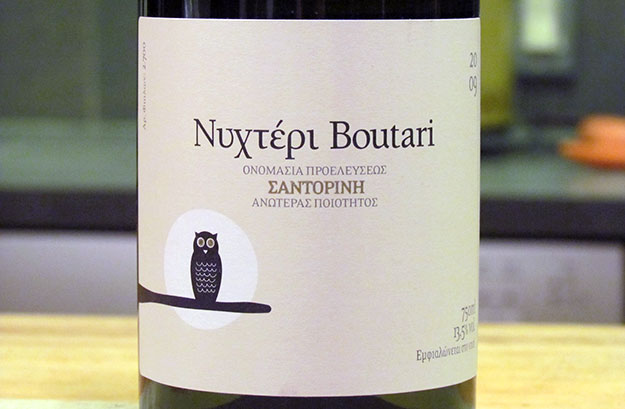
Greek wines - a gift from the wine god Dionysus - were already sung about and revered by poets and philosophers in ancient times. Like the Egyptians, the Greeks were distinguished winemakers. They had a great deal of knowledge of vineyard management and cellar techniques. This knowledge was largely lost during the long Ottoman rule. It was not until the beginning of the 20th century that Greece resumed wine growing.
Until it joined the EU, Greece had no wine legislation. Areas of origin were not protected and there were no regulations to limit the yield per hectare. As a result, the quality left much to be desired. Tourists were treated to the local harvest that tasted good under the Greek sun, but was very disappointing when they returned home to rainy Netherlands. Those days are over. Thanks to the EU, there are now appropriate regulations for wine growing and it is mainly the Greeks themselves who are increasingly demanding.
To start with, there are clear classifications. A bottle with OPAP on the label (Onomasia Proelevseos Anoteras Piotitos), recognizable by the red banderole, can be compared to the Italian DOC. A bottle with the designation OPE (Onomasia Proelefseos Eleghomeni) is the Greek equivalent of the Italian DOCG and has a blue ribbon around the neck. If the label also says Reserve, it has matured in the cellar for two years (for white) or three years (for red). Topikos Oinos means country wine and can be compared to the Italian IGT. Epitrapezios Oinos is table wine, Cava is 'cellar wine', a type of table wine, which has matured in the cellar for two (white) to three years (red) and is often of excellent quality.
Greek winemakers have a lot to choose from to entertain us. The Roman poet Virgil already wrote that it is easier to "count all the grains of sand by the sea than to name all the [Greek] grape varieties". A few dozen are really important for Greek viticulture, such as for white Assyrtiko, Robóla, Vilana and for blue: Mavrodaphne, Mandelaria, Agiorgitiko and Xynómavro, and Limnio. If you want to know more about the typical Greek grape varieties.
All in all, Greece has become a surprising wine country in recent years, which produces excellent wines. Food for the adventurous wine drinker.




 Orange wine (31)
  Fresh (95)
  Light (34)
  Rosé (17)
  Aromatic (20)
  Medium (97)
  Sparkling (30)
  Ripe (72)
  Full-bodied (96)