


The Barolo is one of the most renowned red wines from Italy. With its refined scent of roses, mint and cherries - another time of liquorice, berries and with earthy tones. A good Barolo has depth, finesse and an unprecedented breadth that only becomes more intriguing after many years of bottle rest.
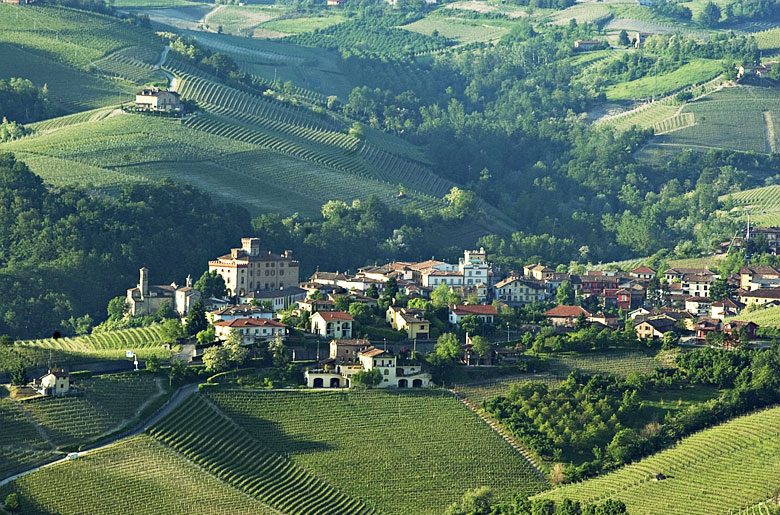
Barolo comes from the vineyards around the town of the same name in the hills of Langhe and Roero in the northern Italian wine region of Piedmont. It is made from the Nebbiolo grape. This delicate, glamorous grape is native to the region, has lots of sun and a long, soft autumn. Because Nebbiolo ripens late, but rewards patience with a complex, rich taste.
For centuries, winemakers from the region made sweet red wine from Nebbiolo. Incomparable to today's Barolo. Until Marchioness Gioletta Feletti of Barolo, a posh lady of French descent, hired French vinologist Louis Oudart in 1850 to make a dry wine from her grapes, following the example of Bordeaux. And with that, the current Barolo was born.
A lot has changed over time. In the past, Barolo was made from grapes spread over the small vineyards of several farmers. This is still the case, but at least as many Barolos can now be made from a single vineyard - thanks to the sharply increased prices. The weeks-long ripening of the must has been replaced by a short ripening at an increased temperature, which makes Barolo less rigid than it used to be.
The Nebbiolo grape is extremely sensitive to the climate and the composition of the soil. And these differ considerably in Piedmont. In the limestone hills of La Morra, Novello and Barolo, Barolo generally produces softer wines than elsewhere. These are the most highly regarded. Further east, the soil contains red sandstone and quartz. Here, Barolo is firmer and has more tannin.
In addition, the harvest years can vary enormously. In taste, but also in quality. In a cold, cloudy autumn, not all grapes are fully ripe at harvest. Finally, there are always winemakers who profit from the high prices, without delivering the appropriate quality. Fortunately, the legislation, for example the maximum number of hectoliters that may be pressed per hectare, has been tightened.
So be suspicious when you find a 'spectacular Barolo offer' on the internet. It could well be a mediocre Barolo from an untalented winemaker from a bad year. In that case, you would be better off buying something else.



 Orange wine (27)
 Fresh (90)
 Light (36)
 Rosé (14)
 Aromatic (22)
 Medium (98)
 Sparkling (27)
 Ripe (71)
 Full-bodied (99)