


Tunisia is an unknown but very old wine country. Wine was already made here in ancient times. The current wine growing is mainly influenced by the French, who planted vineyards in Tunisia in the nineteenth century. Currently, more than a dozen wineries are active. They make modern wines from mainly French grape varieties. Tunisian wine is often served in the local tourist catering industry and more and more is being exported.
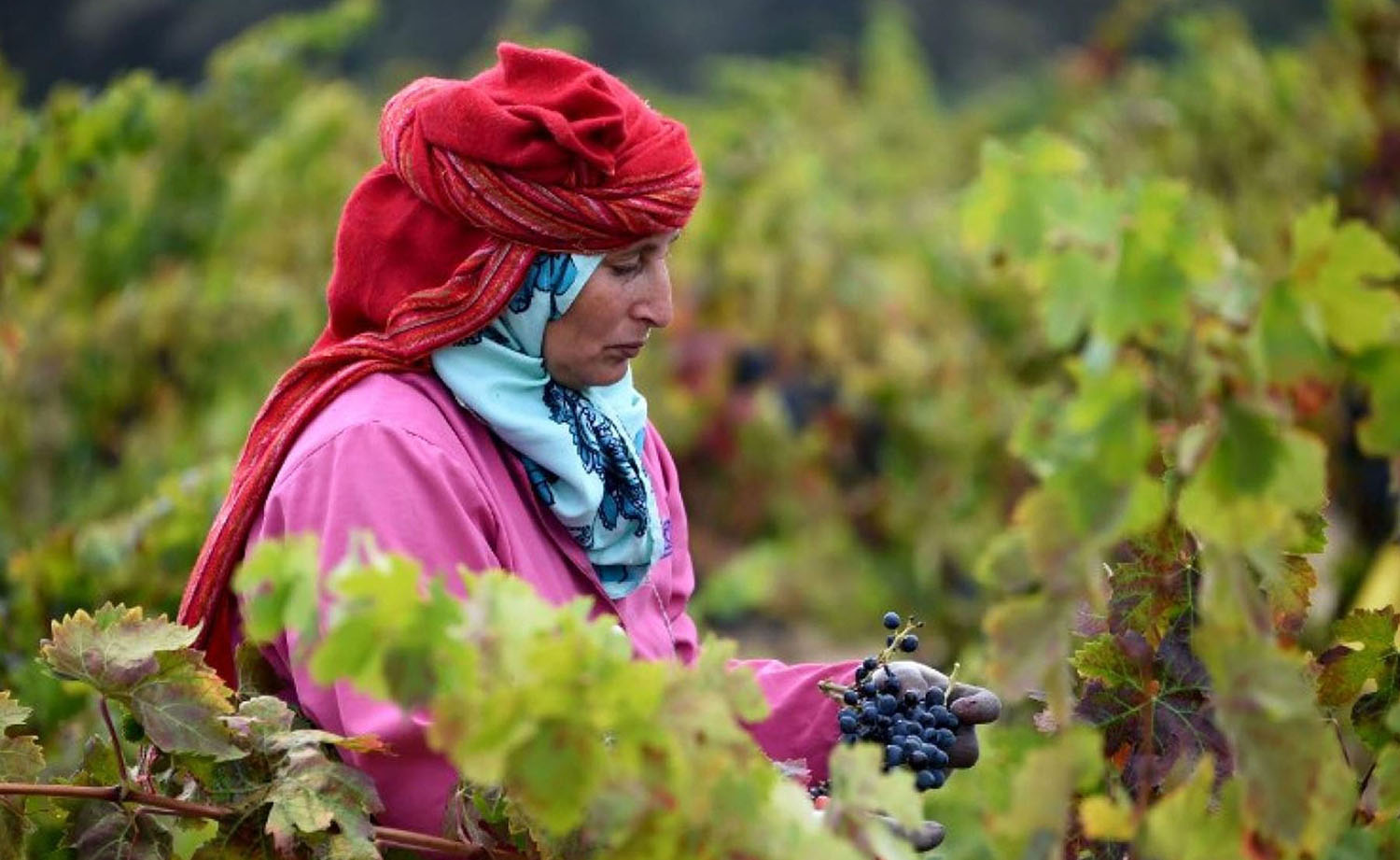
Wine production in Tunisia has a long history, dating back to ancient times when the Phoenicians and Romans established vineyards in the region. Even before the beginning of our era, Carthage – in present-day Tunisia – was an important city supplied with local wines.
Wine production declined during the Arab conquest of the region in the 7th century, but revived during the French colonial period in the 19th century. The French planted southern French grape varieties and exported the wine to their own country. The wine industry in Tunisia experienced significant growth in the 20th century thanks to increased investment and modern winemaking techniques.
Tunisia currently has a relatively small but growing wine industry. The country has a total area of approximately 30,000 hectares of vines, about half of which is used for wine and the other half for table grapes (for eating). This makes it the largest wine producer in North Africa. Interestingly, about two-thirds of the wine produced is rosé, with the remainder red and white.
The industry has faced a number of challenges in recent years, including lack of investment, lack of modern infrastructure and low productivity. The government has attempted to address these issues by providing support and incentives to the wine industry and promoting it as a tourist destination. In recent years, some efforts have been made to promote organic and biodynamic farming and also to increase the export of Tunisian wines, mainly to France and Germany, but also to the United States, Canada and Russia.
Tunisia has several important wine regions, each with its own unique characteristics. Cap Bon is a peninsula in northeastern Tunisia that has been known for its wine production since ancient times. The region has a Mediterranean climate, with warm summers and mild winters, which is ideal for growing grapes. The soils of the region are rich in clay and limestone, which are very suitable for producing high-quality wines. Currently, Cap Bon is the largest wine region in the country with 40 million bottles. The main grape varieties grown in Cap Bon are the local Boussera, Chardonnay and Merlot.
The Zaghouan region is located in the north-central part of the country and is known for its ideal wine-making conditions. The region has a Mediterranean climate, with hot summers and mild winters. Zaghouan is known for its red wines made from the local Boussera grape variety.
Kairouan is located in the center of the country and is known for its semi-arid climate. The main grape varieties grown here are Syrah, Carignan and Cinsault, which are used to produce red and rosé wines.
The Gabes region is located in the south of the country and is known for its desert climate and sandy soils. The main grape varieties grown here are Syrah and Cinsault, which are used to produce red and rosé wines.
Beja is located in the northwest of the country and is known for its mild Mediterranean climate and hilly terrain. The main grape varieties grown here are Chardonnay and Merlot, which are used to produce white and red wines respectively.
Tunisia has adopted the AOC (Appellation d’Origine Controlée) and designated seven so-called AOC areas: Grand Cru Mornag, Mornag, Sidi Salem, Coteau de Tébourba, Thibar, Kélibia and Coteaux d’Utique.
The most commonly planted grape varieties are international ones such as Merlot, Syrah, Carignan, Mourvèdre, Cinsault, Alicante Bouschet, Grenache Noir for red and rosé and Chardonnay, Muscat of Alexandria and Pedro Ximénez for white. The main indigenous grape variety of Tunisia is Boussera.
Tunisia has around a dozen wineries operating in the country, producing a variety of wines using both traditional and modern techniques.
Les Celliers de Carthage is one of the oldest and most important wineries in Tunisia. It is located in the Bizerte region and produces a wide range of wines including white, red and rosé wines. They produce wines from local grape varieties such as Boussera, as well as international varieties such as Chardonnay and Merlot.
Les Coteaux de Carthage is also located in the Bizerte region and is known for its high-quality wines. They produce a variety of white, red and rosé wines using both local and international grape varieties. Château Mornag is located in the south of Tunisia, in the Gabes region. Les Coteaux de Carthage is one of the most modern in the country. They produce a variety of red and roséwines with local grape varieties such as Syrah, Cinsault and Carignan.
Domaine de Bellerive is located in the Zaghouan region and is known for its high-quality red wines made from the local Boussera grape variety. They also produce a range of white wines with international grape varieties such as Chardonnay and Sauvignon Blanc. Finally, Domaine les Aigles d'Or is located in the Beja region and is known for its high-quality white and red wines from grape varieties such as Chardonnay, Merlot and Boussera.




 Orange wine (31)
 Fresh (95)
 Light (35)
 Rosé (17)
 Aromatic (21)
 Medium (99)
 Sparkling (32)
 Ripe (72)
 Full-bodied (95)