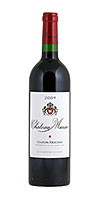
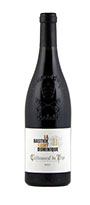
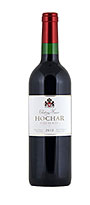
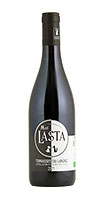
Young wine made from the Cinsault grape is aromatic, with soft fruit on the palate. In France, Cinsault is often blended with other, more extroverted grapes like Mourvèdre or Syrah. Cinsault lends more balance to such blends. It is also commonly found in Lebanon and South Africa.
The quality of Cinsault (also spelled Cinsaut) depends largely on the winemaker's self-control. If they're aiming for the highest possible yield and leave the pruning shears in the shed, it's best to avoid their château. But if Cinsault is pruned heavily and the yield per hectare kept low, this grape can produce very fine wines.
Cinsault is most commonly found in southern France, for example, in the Rhône, the Languedoc, and Corsica. It also thrives in North Africa and the Beeka Valley in Lebanon, perhaps even better than in France. Many Lebanese red wines are made from Cinsault, among others.
In South Africa, Cinsault enjoys a good reputation as a varietal wine. These wines are typically light in color, with plenty of small fruit and some tannin. It's worth mentioning that Cinsault is the father of the famous Pinotage from South Africa. The result of a brief affair with Pinot Noir in a South African laboratory in 1925.
We currently have twelve wines made from the Cinsault grape in our range. You can view our Cinsault wines here.



 Orange wine (32)
  Fresh (97)
  Light (36)
  Rosé (17)
  Aromatic (21)
  Medium (98)
  Sparkling (30)
  Ripe (70)
  Full-bodied (99)