


The wine region of Adjara lies in the far south-west of Georgia, on the Black Sea and against the Turkish border. Like neighbouring Guria, it has a subtropical climate. Around 80 per cent of Adjara is mountainous and largely forested. Its best-known city is the popular coastal resort of Batumi.
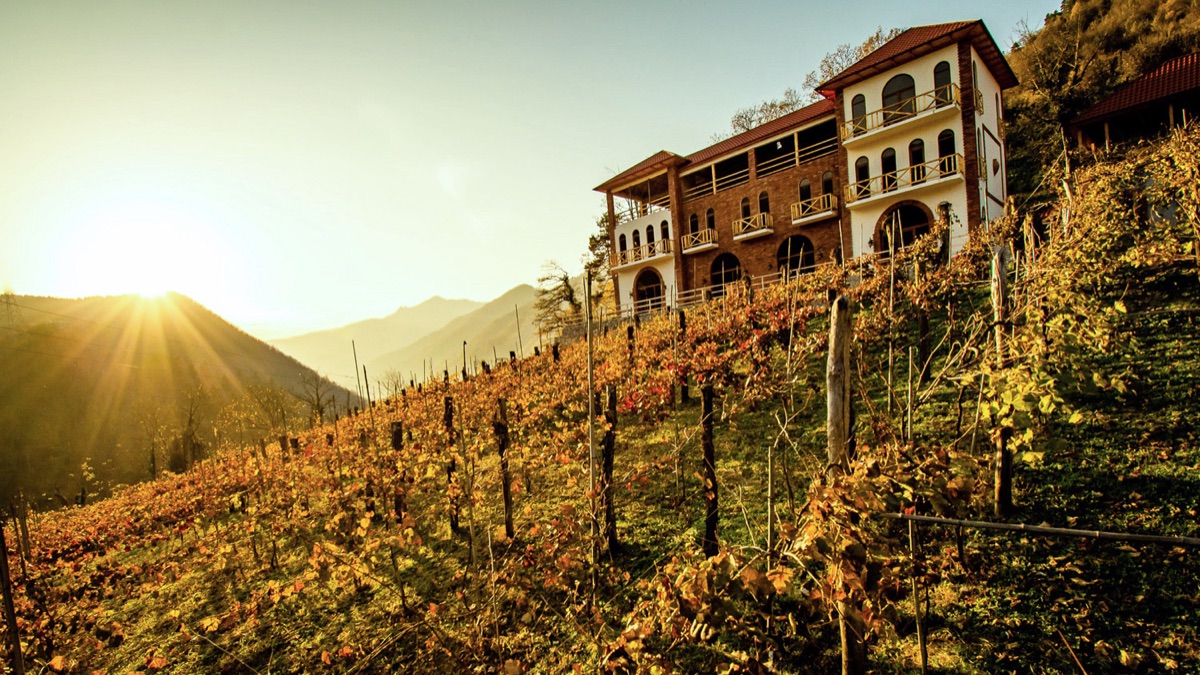
Adjara's history is closely linked to Turkey. The Ottomans conquered the area in 1614, and the population gradually converted to Islam. Only in 1878 did Adjara come under Russian rule. Because of the long Ottoman domination, winegrowing did not develop here as it did in the rest of western Georgia. Vines were mainly kept for table grapes. It was not until Soviet times that Chkhaveri and Tsolikouri were planted.
Today there are two wine areas in Adjara. The first lies in the hills behind the coast, between Kobuleti and the area around Batumi. The second, Keda, lies inland along the Adjaristsqali river and is considered the more promising. Adjara receives more than 3,000 millimetres of rain a year, more than anywhere else in Georgia. The further inland you go, the less rain falls. The soils are poor in lime and humus and often need fertilising.
The most widely planted grape is Tsolikouri. Chkhaveri is mainly made into light, off-dry rosés – nothing to get very excited about. Adjara also has its own indigenous grape, Satsuravi, plus a range of other local varieties grown mostly in small vineyards belonging to local people. A few large wineries have invested in the region, but a real revival of small artisan winemakers has yet to happen.



 Orange wine (31)
  Fresh (98)
  Light (37)
  Rosé (16)
  Aromatic (20)
  Medium (96)
  Sparkling (28)
  Ripe (70)
  Full-bodied (99)