


The Médoc lies on the left side of the Gironde, above the city of Bordeaux. A strip of about 80 kilometres long and at most 10 kilometres wide. Monumental châteaux are a reminder of the wealth of centuries-old wine families. The Médoc wines are red and are dominated by Cabernet Sauvignon. In the poor soils of the pebbly banks of the Gironde, the roots have to go metres deep into the ground to collect nutrients. This makes the juice incomparably rich and complex.
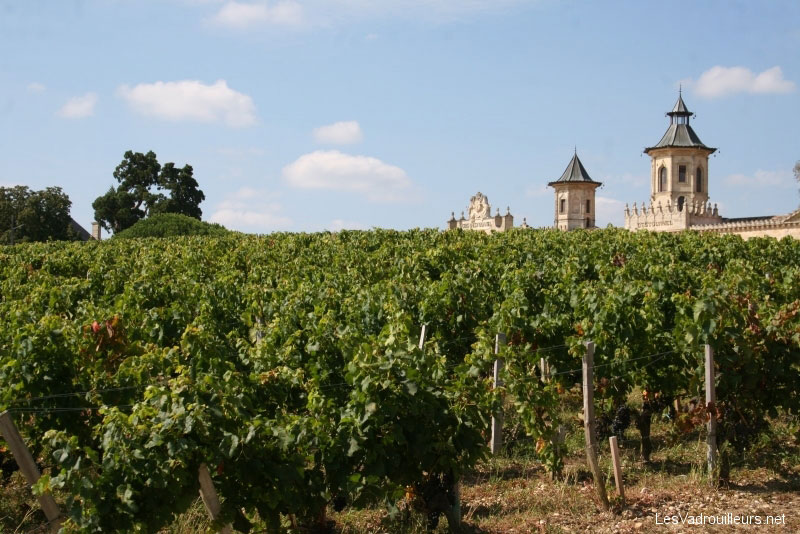
The Médoc lies on the left side of the Gironde, above the city of Bordeaux. A strip of about 80 kilometres long and at most 10 kilometres wide. Monumental châteaux are a reminder of the wealth of centuries-old wine families. Nowhere else in the Bordeaux region will you find so many Grand Cru Classées as here.
The Médoc wines are red and are dominated by Cabernet Sauvignon. This small grape with its thick skin is good for (much) more than half of the blend of almost every winemaker. In the poor soils of the pebbly banks of the Gironde, the roots have to go metres deep into the ground to collect nutrients. This makes the juice incomparably rich and complex. Winemakers from the Médoc are allowed to blend the juice of the Cabernet Sauvignon with Merlot, Malbec, Cabernet Franc and Petit Verdot.
The most northerly in the Médoc are Saint-Estèphe, Pauillac and Saint-Julian. Here you will not find the most pompous châteaux, but the most famous wineries of the Bordelais. With famous names such as Lafite-Rothschild, Latour and Mouton-Rothschild. In total, the area has no fewer than 34 classified châteaux, 18 of which are around the village of Pauillac.
Pauillac is also the most prestigious of the three, with powerful, beautifully structured wines. In Saint-Estèphe, the Cabernet Sauvignon produces more tannin, which the winemakers compensate for with a higher proportion of the softer Merlot.
In Saint-Julian, a large part of the wine is made by classified Grand Crus, but the area lacks a Premier Grand Cru and is therefore overshadowed by Pauillac. The wines from Saint-Julien are elegant and balanced.
The southern part of the Médoc is called the Haut-Médoc. The Haut-Médoc has three municipal appellations: Margaux, Listrac and Moulis. The vineyards have limestone in the soil in various places. Listrac and Moulis do not have classified Grand Crus, but they do have a lot of Cru Bourgeois. In Listrac, the Merlot has a relatively large share in the wine. Both communes produce excellent wines, often with a favourable price-quality ratio due to less prestige.
Margaux is the pearl of the Haut-Médoc. It houses the most classified Grand Crus of all communes in the Médoc. Cabernet Sauvignon dominates. But they are softer and more aromatic and have more finesse than elsewhere. Margaux is therefore also called the 'Burgundy of the Médoc'.



 Orange wine (27)
 Fresh (90)
 Light (36)
 Rosé (14)
 Aromatic (22)
 Medium (98)
 Sparkling (27)
 Ripe (71)
 Full-bodied (99)