


The Austrian wine district of Carnuntum lies east of Vienna, on the Slovakian border. It dates back to Roman times. The soil - with a lot of loam, lime and loess - the abundant sunshine, the shelter of the Leith Mountains and the warm wind from the North Hungarian plain offer good conditions for red wines. Most are sold under the name Rubin Carnuntum.
The Austrian wine district of Carnuntum is located east of Vienna, on the Slovakian border. Wine was already being made here in Roman times. The soil - with lots of loam, lime and loess - the abundant sunshine, shelter from the Leitha Mountains and the warm wind from the North Hungarian plain offer excellent conditions for red wines.
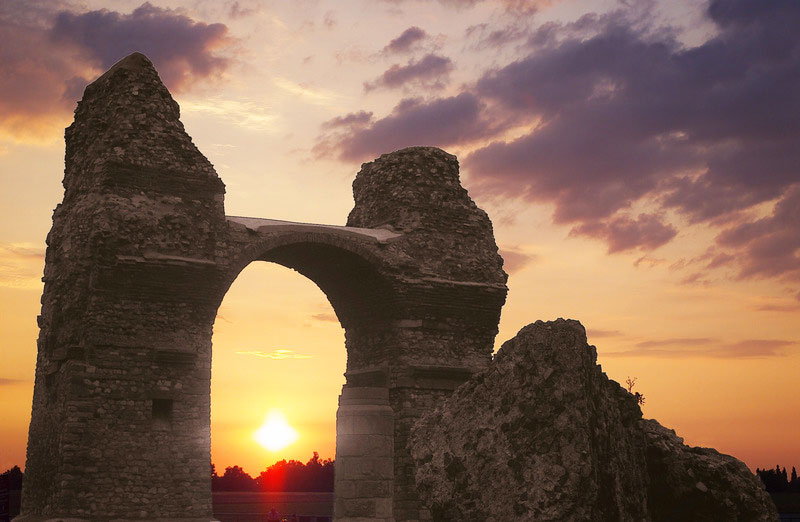
Most red wines from the almost 1000 hectares of vineyards of Carnuntum are sold under the name Rubin Carnuntum. The label often features a picture of the Heidentor, an old Roman gate that you pass on the (old) road from Vienna to Bratislava. The gate is the symbol of the region.
The wines from Carnuntum are mainly made from the Blaufränkisch grape and Zweigelt, often blended with international grapes such as Cabernet Sauvignon and Merlot. Several winegrowers from Carnuntum make an excellent white Grüner Veltliner.
Vine growing in Carnuntum dates back to the time of the Celts, a few centuries before our era. But especially in Roman times, Carnuntum became an important wine district. The region was strategically important for Roman campaigns against the barbarian Germans in the North. It became a military headquarters for the region. The thousands of soldiers stationed here drank the wine from the surrounding vineyards.



 Orange wine (27)
 Fresh (90)
 Light (36)
 Rosé (14)
 Aromatic (22)
 Medium (98)
 Sparkling (27)
 Ripe (71)
 Full-bodied (99)