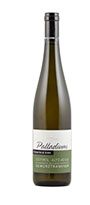
Alto Adige - or: Südtirol - was part of Austria until the First World War. That is still noticeable in everything. German is still spoken and wine is made from 'Austrian grapes' such as Blauburger, Gewürztraminer and Müller-thurgau. But the most important grape of this mountainous region, the Lagrein and Vernatsch, can only be found in Alto Adige.
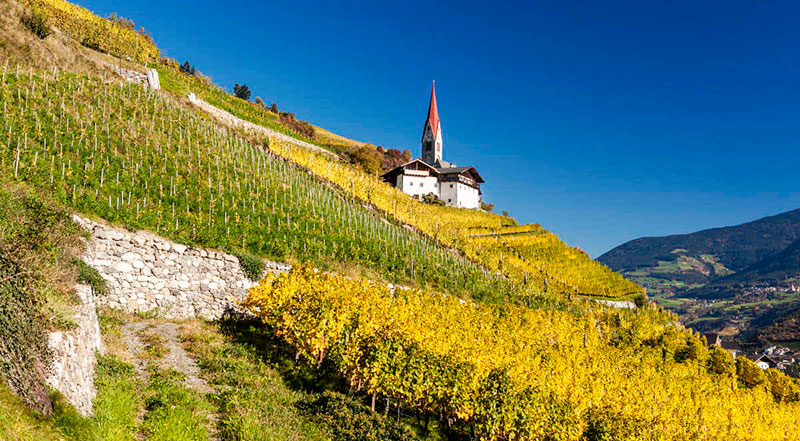
Alto Adige is located around the mountain town of Bolzano, in the far north of Italy, near the Austrian border. It is often mentioned in the same breath as neighboring Trentino, but we do not do that because there are significant differences between the two. German is still spoken in Alto Adige and the grapes on the labels of the local harvest often have an Austrian feel.
Until the end of the last century, Alto Adige was mainly a producer of mediocre wine. Grape growers tried to squeeze the largest possible harvest from their vineyards. Figuratively, because they sold that harvest to cooperatives, who then pressed wine from it. Often from the Vernatsch grape, because it produces a lot of juice per square meter of vineyard.
Remarkably, unlike elsewhere in Italy, it was precisely cooperatives that put Alto Adige on the map as a quality region. Since the 1980s, they have started paying grape growers for quality instead of quantity. In the meantime, the cooperatives started experimenting enthusiastically with steel tanks and wooden barriques. The grapes from the best vineyards were pressed and bottled separately. Alto Adige took a risk with this, but has been amply rewarded for it.
Since the end of the last century, the wines from Alto Adige have been increasingly appreciated. The popular Gewürztraminer - once almost driven out by the Vernatsch - is increasingly being planted. The Weissburgunders, Chardonnays, Silvaners, Kerners and Sauvignon Blancs are just as good. Red wine from Blauburger (known from the Austrian Weinviertel) and Merlot are also doing well. The Vernatsch is no longer a symbol of the decline of Alto Adige. On the contrary, many winemakers nowadays know how to make an excellent, light red wine from it.
A lot has also happened to the pride of the region, the Lagrein grape. It used to be an ingredient of no-nonsense rosé in Alto Adige: the Kretzer. Nowadays he produces not very well-known, but popular red wines, somewhat earthy with plums, cherries and sometimes some soft chocolate in the taste. Much of the best Lagrein comes from the Gries district, because the grape prefers a sandy vineyard with gravel. Winemakers in other districts in Alto Adige now also know how to make beautiful Lagrein. For example, by giving it a short maturation in barriques. We currently have two wines from Alto Adige in our range. You can view all our wines from Alto Adige here.



 Orange wine (27)
 Fresh (89)
 Light (35)
 Rosé (14)
 Aromatic (20)
 Medium (98)
 Sparkling (27)
 Ripe (70)
 Full-bodied (100)