The Jura is certainly not the most famous wine region in France. But it is a very interesting one. The Jura produces some of the most curious wines in the country. No commercial products for the masses, but unique wines with a style all their own.

The Jura is a mountainous region in the east of France, between Burgundy and Switzerland. The winters are cold and bleak, the summers are hot and the autumns are long and sunny. You will find grape varieties there that are not found anywhere else.
The typical Jura grapes are the white Savagnin Blanc (not to be confused with Sauvignon Blanc) and the red Poulsard (or Ploussard) and Trousseau. The rest of the vineyards are planted with Chardonnay and Pinot Noir that have come over from Burgundy. The Chardonnays and Pinot Noirs from the Jura are just a little bit different from those from Burgundy. The soil in the Jura consists partly of limestone (just like Burgundy) but there are also many vineyards on marl. That has a clear influence on the wine. In addition, the area has a different climatological character.
For white wines from the Jura, the distinction between Ouillé and Sous Voile is important to understand. It has to do with the way the wine is made and that way has a great influence on the style of the wine. Wines that are made 'Sous Voile' ferment under a layer of yeast in a barrel that is not completely full. It is an old tradition from the Jura. The wines therefore have an oxidative character, a 'sherry touch' to put it popularly. They are very idiosyncratic, distinctive wines. Wines that are made Ouillé are not oxidative and therefore more accessible in style.v
The Poulsard grape produces pale red wines. Traditionally, it is blended with Pinot Noir and/or Trousseau. The latter produces wines that are slightly darker and slightly more alcoholic and adds power to a blend with Poulsard. Nowadays, however, more and more mono-cépage wines from the Jura (made from just one grape). The blends increasingly appear on the market under the name 'tradition'. The Trousseau is probably the most important grape of the Jura in terms of quality, although only about 6% of the vineyard is planted with it.
Jura wines have become increasingly popular in recent years. Certainly among lovers of natural wine. Although there are only a limited number of, mostly small-scale winemakers active, a relatively large number make organic. Lovers of bubbles can also indulge themselves in the Jura because a relatively large part of the wines here are sparkling.
The Vin Jaune is one of the most remarkable wines from the Jura. Vin Jaune was already famous in the European royal courts in the Middle Ages. It is made from Savagnin Blanc, in a special way. After fermentation, the wine is put into large oak barrels, which are not completely filled. A layer of air remains in the barrel.
This causes a veil of yeast (the voile) to form on the wine. This protects the wine from oxygen and therefore from spoiling. But at the same time, the voile gives the wine all kinds of special aromas. Vin Jaune is deep yellow. It has a penetrating, ripe, sometimes slightly smoky scent of almond and other nuts. The taste is dry and surprisingly fresh, with a spicy touch. Vin Jaune can be kept for (many) decades. In 2012, a bottle of Vin Jaune from 1774 was sold for almost 40,000 euros.
The Macvin du Jura is a relatively unknown Vin de Liqueur from the Jura. It is a sweet wine fortified with grape distillate (Marc). The Macvin is a centuries-old specialty from the Jura. It is increasingly being discovered by sommeliers in the Low Countries as an original accompaniment to a cheese board.
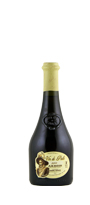
Vin de Paille is made from late-harvested and then dried Chardonnay, Poulsard or Savignon Blanc grapes. These are refined wines with a deep golden, almost amber-orange color. They smell of dried southern fruits and honey, but retain a remarkable freshness. We currently have seventeen wines from Jura in our range. You can view all our wines from Jura here.



 Orange wine (27)
 Fresh (90)
 Light (36)
 Rosé (14)
 Aromatic (22)
 Medium (98)
 Sparkling (27)
 Ripe (71)
 Full-bodied (99)