


When thinking of South American wine, one usually thinks of Argentina or Chile. Brazil still plays a modest role in the international wine world, but that does not mean the country is uninteresting. On the contrary. Over the past few decades, Brazil has undergone a remarkable transformation: from a producer of simple table wines to a country that increasingly produces quality wines and, above all, excellent sparkling wines. For many wine lovers, Brazilian wine is therefore a surprising discovery.
The history of viticulture in Brazil dates back to the sixteenth century. Portuguese colonists set foot in what is now Brazil in 1532. In 1551, the explorer Martim Afonso de Saousa planted the first vineyard there, in the São Paulo region. Later, Jesuits introduced Spanish grape varieties to the south of the country. For a long time, however, European grape varieties proved poorly adapted to the warm and humid Brazilian climate. It was not until the nineteenth century that viticulture really took off, when American grape varieties such as Isabella proved more resistant to diseases and humid conditions.
The major breakthrough came from around 1875, when Italian immigrants settled in the southern state of Rio Grande do Sul. They brought not only knowledge of viticulture but also a genuine wine culture. In the hilly Serra Gaucha region, they recognized conditions that reminded them of Northern Italy. That is where the foundation of the modern Brazilian wine industry was laid.
However, for a long time, Brazilian wine remained primarily focused on the domestic market. Quality was inconsistent and innovation remained limited. That changed starting in the 1970s and 1980s. Foreign producers, including Moët & Chandon, saw potential in the relatively cool south of Brazil and invested in modern winemaking techniques and equipment. At the same time, local producers began experimenting with better grape varieties, lower yields, and more modern vinification. Since then, the quality of Brazilian wine has made a huge leap forward.
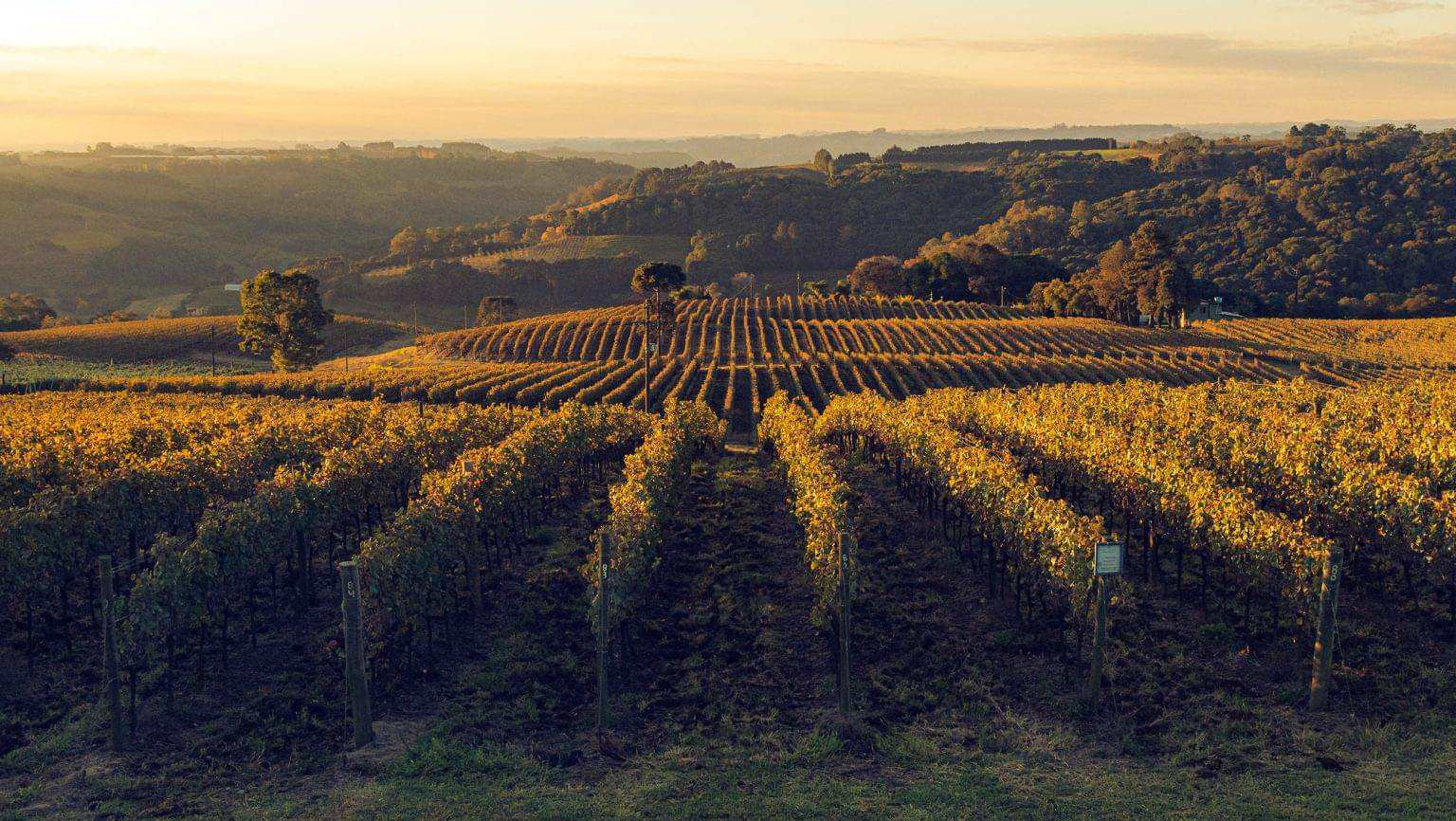
The heart of Brazilian viticulture still lies in Rio Grande do Sul, the southernmost state of the country. This region alone accounts for approximately ninety percent of national wine production. Within Rio Grande do Sul, Serra Gaúcha is by far the most important wine region. The area consists of rolling hills, is situated at altitudes of up to about 600 meters, and has a relatively temperate climate. Cities such as Bento Gonçalves and Garibaldi form the center of the Brazilian wine industry. Vale dos Vinhedos, the country's most famous appellation, is also located here. This region is considered the birthplace of quality Brazilian wine.
Besides Serra Gaúcha, other interesting wine regions are on the rise. Campanha, close to the border with Uruguay, has drier conditions and resembles Uruguay and Argentina somewhat in terms of terroir. Increasingly, elegant red wines of international stature are emerging here. Further north lies Serra Catarinense, a high-altitude area where the vineyards are situated at an altitude of over 900 meters. Thanks to the cooler climate, fresh, aromatic wines can be produced here. Some producers are even experimenting with ice wine.
However, one of Brazil's most remarkable wine regions is not located in the cool south at all, but in the tropical northeast: Vale do São Francisco. Thanks to irrigation from the São Francisco River, grapes can be grown here in a hot and dry climate. This wine region is the wine region in the world located closest to the equator. What makes it special is that winemakers can sometimes harvest two crops per year, something that is possible virtually nowhere else in the world. This creates unique conditions for wine production and makes Brazil one of the most experimental wine countries in the world.
In terms of grape varieties, Brazil is a mix of tradition and international influences. For a long time, American grape varieties such as Isabella, Niagara, and Concord dominated, primarily due to their resistance to diseases and humidity. These grapes are still used for simple table wines and sweeter styles. Nowadays, however, quality producers focus mainly on classic European grape varieties.
Among red grapes, Cabernet Sauvignon, Merlot, Tannat, Teroldego, Barbera, Touriga Nacional, and Pinot Noir play an important role. Merlot, in particular, performs remarkably well in the cooler south of Brazil and often yields soft, fruity, and accessible wines. Tannat, known from Uruguay, is also successfully cultivated and produces robust, spicy red wines. For white wine, Chardonnay, Riesling, Gewürztraminer, Trebbiano, and Sauvignon Blanc are popular. Moreover, Chardonnay is essential for the production of sparkling wine, a category in which Brazil is gaining increasing international recognition.
So what can you actually expect from a Brazilian wine? In general, Brazilian wines are accessible, fruity, and relatively fresh in style. Drinking pleasure takes precedence over complexity. Due to the climate, many wines retain a lively acidity and are generally not very alcoholic. Red wines are often smooth and aromatic, with plenty of red and black fruit, without extremely heavy tannins. White wines typically display fresh citrus and tropical notes.
However, Brazil's absolute specialty is sparkling wines, known locally as espumantes. Many wine connoisseurs currently consider these to be the country's strongest category. Thanks to the relatively cool climate in parts of southern Brazil, grapes such as Chardonnay and Pinot Noir retain sufficient freshness for quality bubbles. Brazilian sparkling wines often combine ripe fruit with a fresh mousse and frequently prove to be surprisingly well-priced. Some international tastings now rank Brazilian espumantes among the best sparkling wines of South America.
Although Brazil is not yet a global player like Chile or Argentina, the country's international standing is growing steadily. Producers are investing increasingly in terroir-oriented practices, better vineyard management techniques, and sustainable viticulture. Attention to appellations of origin is also increasing. Vale dos Vinhedos was the country's first official appellation, but several regions now possess protected appellation systems. This helps to better define quality and make it internationally recognizable.
By now, over 80,000 hectares of vines have been planted in Brazil. They are cultivated by approximately 1,000 wineries, the vast majority of which are relatively small family businesses. In 2022, they produced 3.2 million hectoliters of wine. The outlook for Brazilian viticulture appears positive. Paradoxically, climate change works partly to the advantage of certain Brazilian regions. Higher elevations and cooler southern zones are becoming increasingly suitable for quality viticulture. At the same time, Brazil possesses enormous geographical diversity, allowing producers to experiment with a wide range of styles and grape varieties.
The biggest challenge remains international visibility. Brazilian wine is still exported relatively little, and many consumers associate the country more with coffee, football, or caipirinhas than with wine. However, that perception seems to be slowly changing. Quality is visibly rising, especially in sparkling wines and crisp red blends. For adventurous wine lovers, Brazil is therefore one of the most interesting emerging wine countries of the moment.




 Orange wine (31)
 Fresh (95)
 Light (35)
 Rosé (17)
 Aromatic (21)
 Medium (99)
 Sparkling (32)
 Ripe (72)
 Full-bodied (95)