

Orange wines are wines from white grapes whose skins (and pips) have been soaking for a long time. These skins and pips give off colour, making the wine amber or even orange. And they give off aromas and flavours. Orange wines therefore taste very different from white wines. It is truly a category of wine in itself.
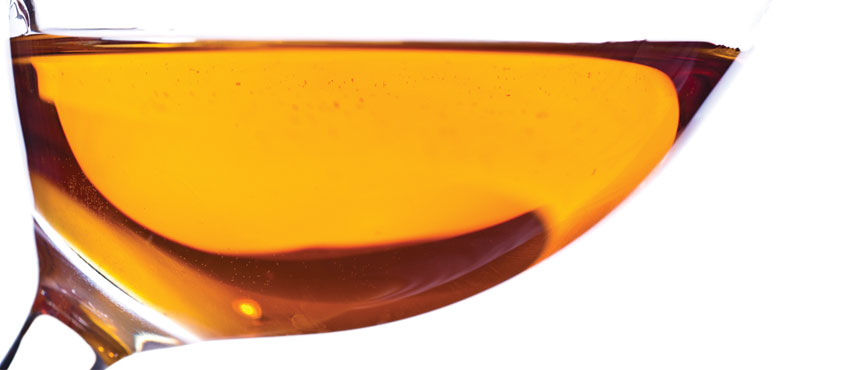
The best-known orange wines come from Georgia, Slovenia and the Italian Friuli. They are a trend in the international wine world. Precisely because they are so different. In contrast to 'blue wines', for example, orange wines are not a marketing trick. Orange wines have been made in Georgia for thousands of years. It is the oldest method of winemaking that is protected by UNESCO. Orange wines are also made in Friuli and Slovenia according to age-old traditions. These traditions have been rediscovered by a number of winemakers in recent years.
In Georgia - the oldest wine country in the world - wine is traditionally made in large earthenware amphorae, the so-called Qvevri. The Qvevri is dug into the winemaker's cellar. Only the mouth of the jug protrudes above the ground. The grapes are crushed slightly and placed in the Qvevri. Georgian winemakers then wait until the wine starts to ferment on its own yeasts. They add nothing. At most, the Qvevri is stirred occasionally. It usually takes half a year for the wine to ferment and mature in the Qvevri. The grape skins and pips have then sunk to the bottom. The wine has filtered itself and is scooped or sucked out of the Qvevri. Georgians themselves prefer to speak of amber wine rather than orange wine.



 Orange wine (27)
 Fresh (89)
 Light (35)
 Rosé (14)
 Aromatic (20)
 Medium (98)
 Sparkling (27)
 Ripe (70)
 Full-bodied (100)