


Chianti is made in a large part of the vineyards of Tuscany. With the Sangiovese grape as the main ingredient. The quality has improved by leaps and bounds in recent years. Chianti is now one of the best-selling Italian quality wines.
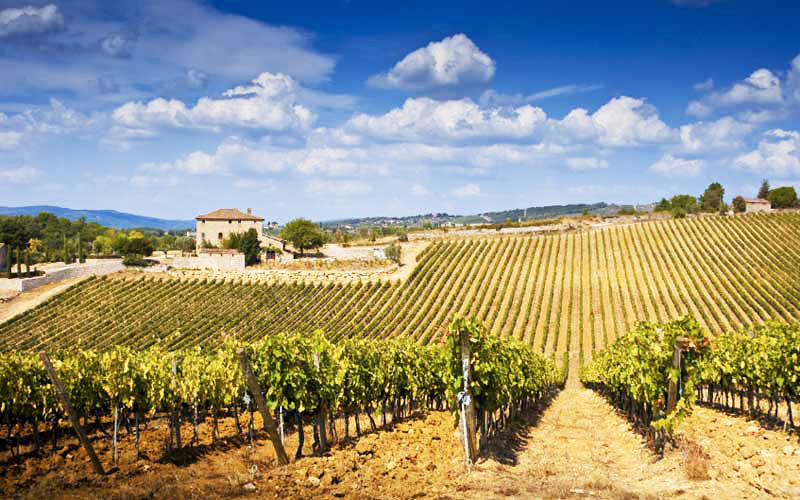
Chianti was already made in the 13th century in the Tuscany region. Initially it was a white wine. In the 18th century it had become a red wine, based on the Canaiolo grape and only then did Sangiovese become the main ingredient. For a long time, Chianti had a questionable reputation. The red juice of Sangiovese can have strong acids. The winemakers therefore mixed it with some white juice of the Trebbiano Toscano or they added dried grapes halfway through the fermentation to soften the wine. The Chianti became easier to drink, but it did not improve the quality. Nowadays, winemakers tackle this better. For example, by adding some juice of the Colorino, the Mammolo or the Canaiolo.
In the 1970s, a few wealthy Italians bought vineyards in Tuscany. They attracted very skilled winemakers. They planted Merlot, Syrah and Cabernet Sauvignon. They experimented with wooden barriques and left the white grapes alone. The results were remarkable. There was just one problem: it was against the legislation for Chianti and so they had to market their beautiful 'Super Tuscans' as 'table wine'.
The legislation has now been amended. Chianti must be made from at least 80% Sangiovese. Canaiolo Nero and Malvasia Nera may still be added, and Merlot and Cabernet Sauvignon are now also permitted. The yields per hectare are limited, the alcohol percentage is a minimum and small barriques are permitted. Some white juice from Trebbiano may still be added, but hardly any winemakers do this anymore. The best Chiantis can develop excellently. They develop a ripe taste with hints of tobacco over the years.
The Chianti area is large. The vineyards are located on hills and vary enormously. One Chianti is therefore not the same as another. To make it a bit clearer, eight districts have been named. The best Chiantis generally come from the Chianti Classico region. Rufina is also a good region. The same applies to Colli Sensesi, although many winemakers there are also allowed to put Brunello di Montalcino or Vino Nobile di Montepulciano on the label. Because that yields more, few winemakers choose the Chianti Colli Sensesi designation. The other districts are: Montespertoli, Colline Pisane, Montalbano, Colli Aretini and Ciolli Fiorentini.



 Orange wine (27)
 Fresh (90)
 Light (36)
 Rosé (14)
 Aromatic (22)
 Medium (98)
 Sparkling (27)
 Ripe (71)
 Full-bodied (99)