


Wine and Israel have been inextricably linked for centuries. Israeli quality wine is something of the last few decades, because in recent years there have been major modernization impulses. From dry to sweet, from red to white. Although Israeli wine is often associated with kosher wine, only 15% of the total wine production is produced in a kosher manner.
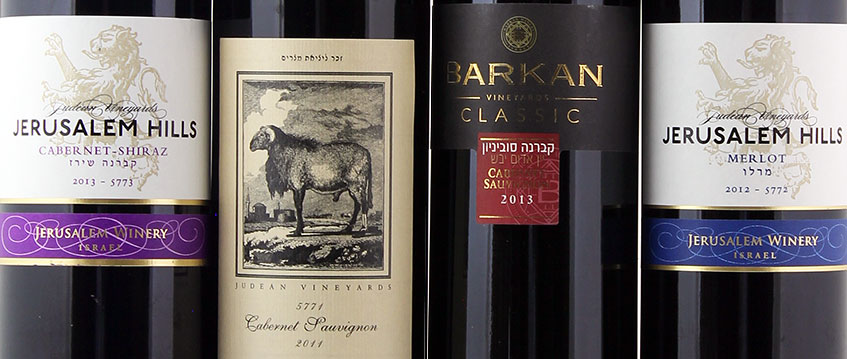
Wine is the only drink that has both a secular and a sacred definition. It is a product of the complete or partial alcoholic fermentation of grapes, whether pressed or not. Unless you have the Bible in mind. Then wine is an image of God's love and blessing for mankind. The vine was, alongside fountains, fig trees, mountains and valleys, one of the seven promises for the Jewish people. Drinking wine, 'grape blood', ensured that man would get to know and understand 'Him' better. Although in moderation and with respect for the gift of the vine.
In ancient Mesopotamia, various drinks made from fermented fruits were drunk. Artists, poets and writers in particular saw these drinks as a means to broaden their minds, to describe life even more lyrically. This hazy state brought them closer to a 'higher power'. Until it was preached that alcohol was a great sin. Every vine had to pay the price. Also the vines in Israel at the time of the Muslim conquest. Later Crusades led to the replanting of vines.
But it was not until the 19th century that wine production became 'serious business'. Baron Rothschild, known for Château Lafite-Rothschild in Bordeaux, invested in viticulture and vinification in Israel. The sales market for the wines consisted of Jewish communities all over the world. And of course Israel itself, where more and more Jews returned. Decades later, the knowledge from France was supplemented with experts from Davis, California. The result was that 'terroir thinking' gained ground, the quality of wine improved and Israel was able to rid itself of the image of producing only kosher wines.
Israel has 6,000 hectares of vineyards divided over five wine regions. There are major differences, which are mainly determined by different climates. The vineyards in the north of the country are generally much cooler than, for example, the vineyards in the Negev desert. The northern region of Galilee is the best regarded. This is where most Israeli quality wines come from.
About 15% of the wine produced in Israel is kosher. How the wine, red, white and rosé, is made and how it retains its sacred status is set out in Jewish law. There are numerous regulations. First of all, only people who belong to the Jewish people are allowed to come into contact with the wine, from production to serving. In this way, the sacred status is protected. The entire vinification process must be supervised by a rabbi or a supervisor who upholds the Jewish dietary law.
French influences can be found in the selection of grape varieties that have been planted: Chardonnay, Merlot, Cabernet Sauvignon, Sauvignon Blanc and also Syrah, Mourvèdre, Pinot Noir, Gewürztraminer and Riesling. For the hot regions, the Emerald Riesling is used, a cross between Garnacha and Muscadelle. Another local cross that is often used for red Israeli wine is Argaman. This grape is a cross between the Portuguese Vinhão and the French Carignan grape. The obscure Marawi (also Hamdani) has probably been indigenous to the region for much longer. In recent years, wine has been made from this white grape in Israel again.




 Orange wine (31)
 Fresh (95)
 Light (35)
 Rosé (17)
 Aromatic (21)
 Medium (99)
 Sparkling (32)
 Ripe (72)
 Full-bodied (95)