


Romania has been making interesting wines for centuries. An interesting mix of international and indigenous grapes grows there. In recent years, there has been considerable investment and modernization. Wine country Romania now has more to offer than many experts realize. You can find them more and more often in both the hospitality industry and retail. Romania has many vineyards and indigenous grapes that surprisingly often start with Fetească.
Romanian wine history is thousands of years old. According to legend, there were so many vineyards on the Romanian East Coast long before our era that the Greek god of wine Dionysus was supposedly born here. It is a fact that in Roman times the area was famous for its wealth of wine growing. In the Middle Ages, Saxon peoples emigrated to central Romania. They brought their own grape varieties with them, which are still grown in this region today. In the 19th century, Romanians maintained close ties with French winemakers.
Romanian vineyards are spread across the country. White wines mainly come from the North, red from the South. Thanks to close ties with France, Cabernet Sauvignon and Merlot are widely planted. The white Welschriesling (in Romania: Italian Riesling), Aligoté and Pinot Gris are also common.
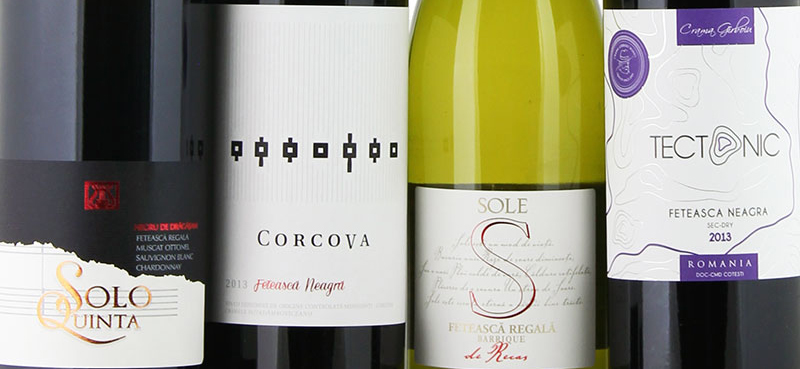
Most interesting for the adventurous wine drinker are wines from indigenous Romanian grapes with exotic names such as Fetească Regală, Fetească Albă, Şarbă, Graša de Cotnari, Babeašca Neagra, Negru de Drăgăşani, Novac and Fetească Neagră. In the north you will find Hungarian grapes, such as Kadarka and Furmint. No coincidence, because this part of the country belonged to Hungary until the First World War.
Romania has a reputation to uphold when it comes to sweet dessert wines. In the Cotnari wine district, a sweet dessert wine is produced that was one of the most popular in Europe in the 18th century. The Graša de Cotnari, named after the grape of the same name, was considered ‘the king of Romanian wines’. It is still produced, but has been forgotten internationally.
The quality of Romanian wine varies enormously. From boring to very interesting. Romania has a huge grape production. One of the largest in Europe. But many of those grapes are trucked to other - better known - European wine countries and end up in bulk wines. Fortunately, there is a growing number of passionate winemakers, who have modernized their business and produce quality wines. The hopes of the nation are pinned on these good winemakers and there is no reason not to taste their wines because the quality has increased considerably over the past ten years.




 Orange wine (31)
 Fresh (95)
 Light (35)
 Rosé (17)
 Aromatic (21)
 Medium (99)
 Sparkling (32)
 Ripe (72)
 Full-bodied (95)