


The domaine of Jean-Paul and Charly Thévenet in Villié-Morgon is one of the best-known names in Beaujolais and one of the founders of the natural wine movement in France. In the 1980s father Jean-Paul was one of the famous "Gang of Four", the group of winemakers in Morgon who restored the natural way of making wine. Today he runs the domaine together with his son Charly. They make Morgon from old Gamay vines on granite soils, wines known for their purity, finesse and minerality.
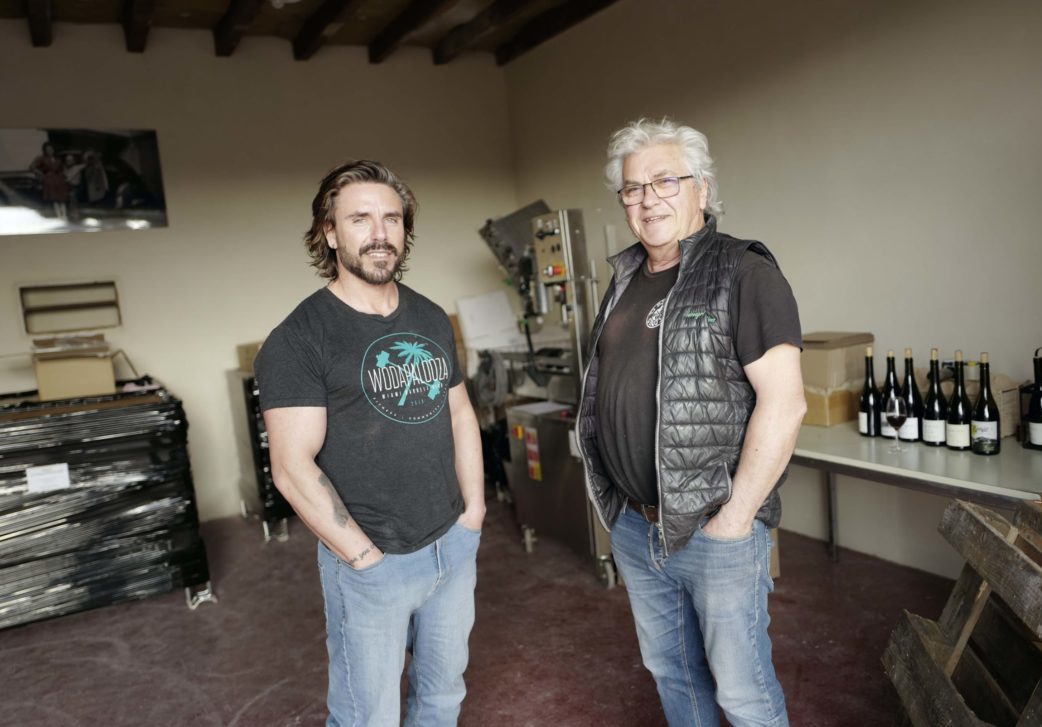
The Thévenet family has been making wine in Villié-Morgon for four generations. The village lies in the heart of Beaujolais, just south of Chiroubles. Jean-Paul took over the family domaine in 1976. At that time most growers in Beaujolais used chemical fertilisers, weedkillers and synthetic pesticides, and wine was made with added yeasts, sugar and sulphur.
Together with his friends Marcel Lapierre, Jean Foillard and Guy Breton, Jean-Paul chose a different path. Their inspiration was Jules Chauvet, a Beaujolais winemaker and scientist who argued for a return to natural winegrowing. Influenced by Marcel Lapierre, Jean-Paul began to repair the damage modern farming had done to his vineyards. He made his first natural wine in 1981. It took a few more years before he really mastered it.
The group, which became known as the "Gang of Four", was put on the map in the United States by the importer Kermit Lynch. Their approach was simple: old vines, no chemicals, late harvesting, strict selection, wild yeasts, no sugar, no filtration and as little sulphur as possible. This small group of pioneering winemakers thus became a major inspiration for the natural wine movement that later took off worldwide.
Son Charly followed in his father's footsteps, but first started his own domaine. He bought old-vine vineyards in neighbouring Régnié, where he began making wines under the name Grain & Granit. That domaine has been farmed biodynamically since 2008. Since 2018 father and son have made the wines from both domaines together under one label. Charly has made his own mark, above all in the vineyard.
The domaine is in Villié-Morgon, the centre of the Morgon cru, one of the ten crus of Beaujolais. Morgon is known for its powerful wines that can be cellared for a relatively long time. Jean-Paul's original domaine covers less than five hectares. Together with Charly's vineyards in Régnié, the total comes to about 11.5 hectares.
Only one grape is grown: the red Gamay. Many of the vines are old, around sixty years in the Morgon vineyards. The Vieilles Vignes even uses vines planted in 1929, 1936 and the early 1960s. In Régnié there are vines from 1932 and 1946. These old vines give little juice, but that juice is highly concentrated and of high quality.
The soil in the vineyards consists of sandy, weathered granite with patches of schist. According to Jean-Paul, the typical minerality of the wines comes from the roots being able to penetrate the granite soil right down to the bedrock.
In the cellar father and son follow the principles of Jules Chauvet. The grapes are fermented as whole bunches using carbonic maceration, the classic Beaujolais method. Charly first chills the grapes to preserve fruit and freshness. He does without punching down and pumping over, which gives fine, silky tannins. Fermentation is spontaneous, with wild yeasts. The wines mature in concrete vats or used Burgundy oak barrels. They are neither fined nor filtered. Sulphite is added only at bottling, and in very small amounts.
The range is small but select. The Morgon Tradition is the house's entry-level wine, made from vines around sixty years old. The Morgon Vieilles Vignes, from the oldest vines in the vineyard, is the domaine's best-known wine: concentrated, complex and age-worthy. From Régnié comes the Grain & Granit, an elegant, floral wine from old vines. The wines are highly regarded in the international press. Jamie Goode gave the 2021 Morgon Vieilles Vignes and Grain & Granit 95 points each, praising their purity, finesse and minerality.



 Orange wine (30)
 Fresh (93)
 Light (35)
 Rosé (16)
 Aromatic (20)
 Medium (99)
 Sparkling (31)
 Ripe (72)
 Full-bodied (94)