


The small Italian wine region of Valle d'Aosta is a paradise for adventurous wine drinkers. In the highest vineyards in Europe, forgotten native grapes such as Petit Rouge and Petite Arvine grow on steep mountain slopes, from which remarkable, idiosyncratic wines have been made for hundreds of years.
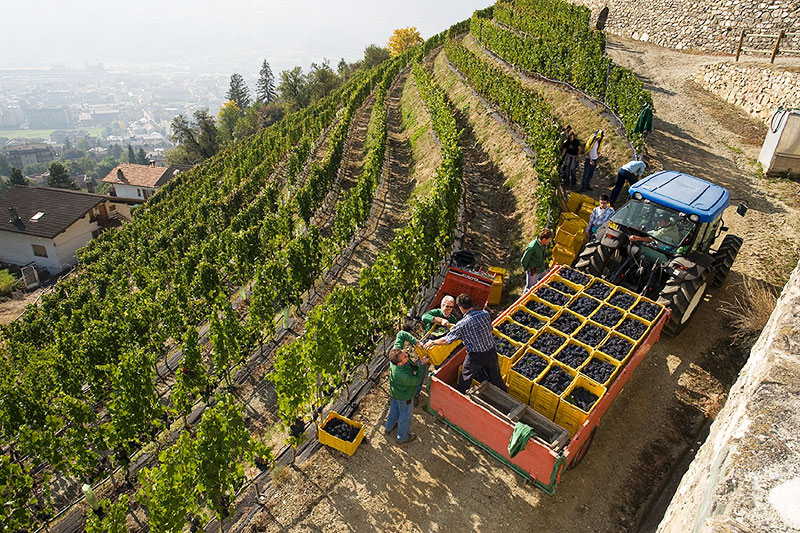
Valle d'Aosta is located in the Alps in the extreme northwest of Italy, near the border with Switzerland and France. The mountains are now Italian, but have exchanged pennies with neighboring countries several times in the past. That is why, in addition to Italian, French is still spoken.
Nowhere else in Europe is wine made at such a lonely altitude - up to 1300 meters. The Romans started it. In the Middle Ages, monks continued the tradition. It is therefore quite a job to maintain the vineyards and harvest the grapes on the steep slopes. Today there are still a few hundred hectares of vineyards left, but the few thousand small wine growers from Aosta Valley are doing everything they can to further expand wine growing.
Valle d'Aosta has a unique microclimate. Sandwiched between the high slopes of the Alps, winters can be bleak and very cold and summers hot and sunny. The temperature differences between day and night can be quite significant and that gives the grapes a lot of flavor and fruitiness. The white grapes grow in the highest vineyards and generally produce fresh, fruity wines. The blue grapes grow lower and can develop considerable vigor thanks to the abundant sun.
Valle d'Aosta offers a unique variety of very local, forgotten grape varieties. The white Petite Arvine and Blanc de Valdigne are worth a mention. The Blanc de Valdigne is one of the few European grapes that proved to be resistant to the phylloxera. It grows in the highest vineyards of Valle d'Aosta. The spicy, lemon-fresh, sometimes slightly sparkling Blanc de Morgex et de La Salle is made from it. The Petite Arvine can be found not only in Valle d'Aosta, but also in the Swiss Valais, located further away. It is made both dry and sweet by drying the grapes. Better-known white grape varieties from the Aosta Valley vineyards are Müller-thurgau, Chardonnay, Pinot Blanc and Pinot Gris.
Among the blue grapes of Valle d'Aosta, the Petit Rouge is by far the most important, accounting for about three quarters of the blue harvest. It produces fairly rough red wines. The Petit Rouge is the main ingredient of the Enfer d'Arvier, a wine known for its grape aroma, spice and pepperiness. Other natives of the Aosta Valley are the Vien de Nus and Neyret. Better-known varieties are Gamay, Pinot Noir, Nebbiolo, Freisa, and nowadays also Syrah, Merlot and Cabernet Sauvignon.



 Orange wine (29)
 Fresh (92)
 Light (35)
 Rosé (16)
 Aromatic (20)
 Medium (101)
 Sparkling (31)
 Ripe (73)
 Full-bodied (98)