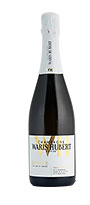
Champagne is probably the most famous and well-known wine in the world. No matter where you are, if there is something important to celebrate, a bottle of Champagne is always opened. This has three reasons: only three grapes may be used, the production process is prescribed in detail and there has been brilliant marketing for centuries.

Champagne is the northernmost wine region of France. Actually too cold to make good still wines and you won't find any there. It's all about the world-famous bubbles. They have been made there since the 17th century.
At the time, it was not the intention for the wine to contain bubbles. But on transport to England, the still white wine from Champagne sometimes unintentionally fermented a second time. On arrival, it turned out to contain bubbles. The English customers liked it quite a bit, but complained about exploding bottles.
Dom Pérignon, the abbot of the Hautvillers monastery, tried in vain for years to get those annoying bubbles out of his wine. When that didn't work, he decided to use extra sturdy bottles and an extra large cork. Champagne was born.
Champagne is almost always made from (a combination of) Chardonnay, Pinot Meunier and Pinot Noir. There are still five grape varieties allowed, but most of them are almost extinct: Arbane, Petit Meslier, Pinot de Juillet, Pinot Gris Vrai (also called Fromentau) and Pinot Blanc Vrai. Now that the climate is changing, it is possible that these forgotten Champagne grapes will return. A few winemakers in Champagne are experimenting with them.
The production process is particularly complicated and precisely prescribed. As a result, Champagne always tastes recognizable. There are differences in quality, but you know what to expect when you open a bottle and you are rarely disappointed.
The Champagne market has been dominated by a few big brands for hundreds of years. They buy the grapes from different vineyards. The best known are Moët & Chandon, Bollinger, Veuve Cliquo, Dom Perignon, Piper Heidseck and Taittinger. Together, the big brands account for about 75% of the production. The remaining 25% is made by small winegrowers. Their wines have been receiving increasing attention in recent years.
The Grand Crus and Premier Crus are made from grapes from specific vineyards. The conditions in these vineyards are so good that grapes can ripen optimally. The absolute top of Champagne are the Cuvée Prestiges. These are Champagnes made from grapes from Grand Cru vineyards, blended with the best Pinot Noir from the region.
The French protect the reputation of their Champagne with all permissible means. They understand better than anyone that wine is an emotional product. Over the centuries, they have successfully convinced everyone in the world that you should open a bottle of Champagne when there is something to celebrate. And that it is logical that you pay three times as much for it as for a sparkling wine that is made an hour's drive away. And we are all happy to believe it. Because our hearts still beat faster when a bottle with the magical name on the label is uncorked. We currently have one wines from Champagne in our range. You can view all our wines from Champagne here.



 Orange wine (29)
 Fresh (92)
 Light (35)
 Rosé (16)
 Aromatic (20)
 Medium (101)
 Sparkling (31)
 Ripe (73)
 Full-bodied (98)