


Graves is the oldest wine region of the Bordelais. Not only dry red and white wines are made here, but also noble sweet wines. Sauternes is the most famous appellation from Graves. Intensely sweet wines are made here, which have been among the most exclusive wines in the world for centuries.
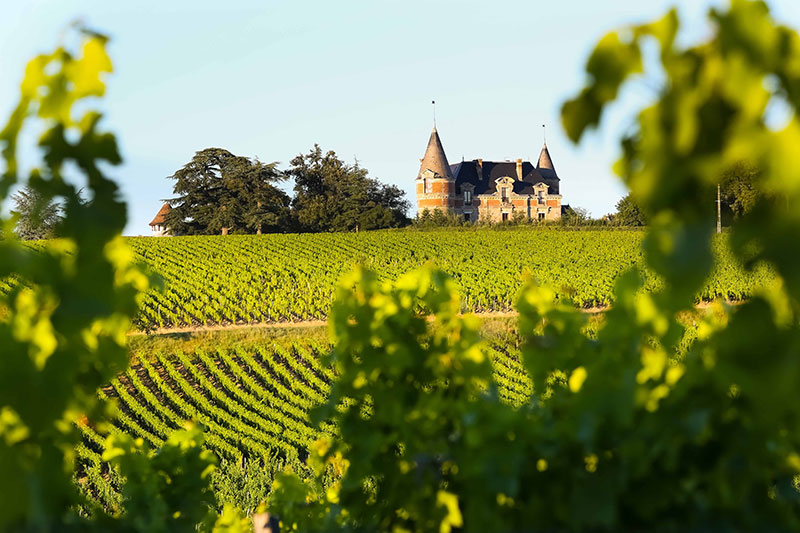
Graves is the area directly below Bordeaux, to the left of the Garonne river. The vineyards are located on poor soil with lots of pumice and gravel. In Graves, dry, mild white wines from Sémillon and Sauvignon Blanc are marketed as Graves Supérieurs. The red wine from Graves is made from the same wines as in the Médoc: Cabernet Sauvignon, Merlot and Cabernet Franc. For the sweet wines from Sauternes, Sémillon is the most important grape.
Although it is the oldest wine region in the Bordeaux region, Pessac-Léognan only received its own Appellation d'Orgine Contrôlée in 1975. Pessac-Léognan borders the suburbs of the city of Bordeaux. Due to the urbanization of the region, it had almost disappeared as a wine region. But in recent years, the number of vineyards has increased again. The famous Château Haut-Brion, one of the oldest Premier Cru Classées of the Bordelais, is located there.
Excellent red and white wines are made in Pessac-Léognan. The reds are made from the same grapes as in the Médoc. But the proportion of Cabernet Sauvignon is lower, in favour of the somewhat softer Merlot and Cabernet Franc. The white wines are fresh and fruity, from Sauvignon Blanc and Sémillon.
In the south of Graves lies the most famous appellation of the region: Sauternes. Only here, in the Hungarian Tokaj and around the banks of the Austrian Neusiedlersee, are the winemakers fully specialised in making noble sweet wines. This is wine from grapes that have been affected by Botrytis Cinerea or 'noble rot'.
Sauternes is located in the armpit of two rivers. The warmer water of the Ciron flows into the cold Garonne. This creates a dense mist in the morning. Ideal conditions for noble rot. The fungus perforates the skin of the grape. The water from the fruit evaporates and the grape shrivels. Only the sugars, acids and flavour esters remain. No more than one or two glasses of this special sweet wine come from one complete grapevine.
It may sound unappetising, but no other wine has such an intense flavour of pineapple, honey, peach, candied citrus, caramel and such a velvety soft mouthfeel and incredible shelf life as a good Sauternes.
The absolute top of Sauternes is the legendary Château d'Yquem. As early as the 19th century, it was awarded the most prestigious Cru of all Châteaux: Premier Cru Supérieur.
Barsac, located next to Sauternes, also specialises in noble sweet wines. Although it produces two Premier Crus and seven Deuxièmes Crus, Barsac is still overshadowed by Sauternes. It is an interesting appellation for those looking for a relatively favourable price-quality ratio.
Cérons is the least known appellation from Graves. It produces semi-sweet and sweet white wines. Most are made from late-harvested - and not noble rotten - grapes.
In Sauternes, Barsac and Cérons, the winemakers mainly use Sémillon grapes, which are often mixed with Sauvignon Blanc and a drop of Muscadelle to add more acidity to the wine.



 Orange wine (27)
 Fresh (90)
 Light (36)
 Rosé (14)
 Aromatic (22)
 Medium (98)
 Sparkling (27)
 Ripe (71)
 Full-bodied (99)