


Samegrelo, also known as Mingrelia, lies in north-western Georgia, between the Black Sea and the mountains of Svaneti. The area has a rich wine history, but today it is best known for tea and citrus fruit. The potential of Samegrelo's terroir has barely been tapped, and that is exactly what makes the region interesting for the future.
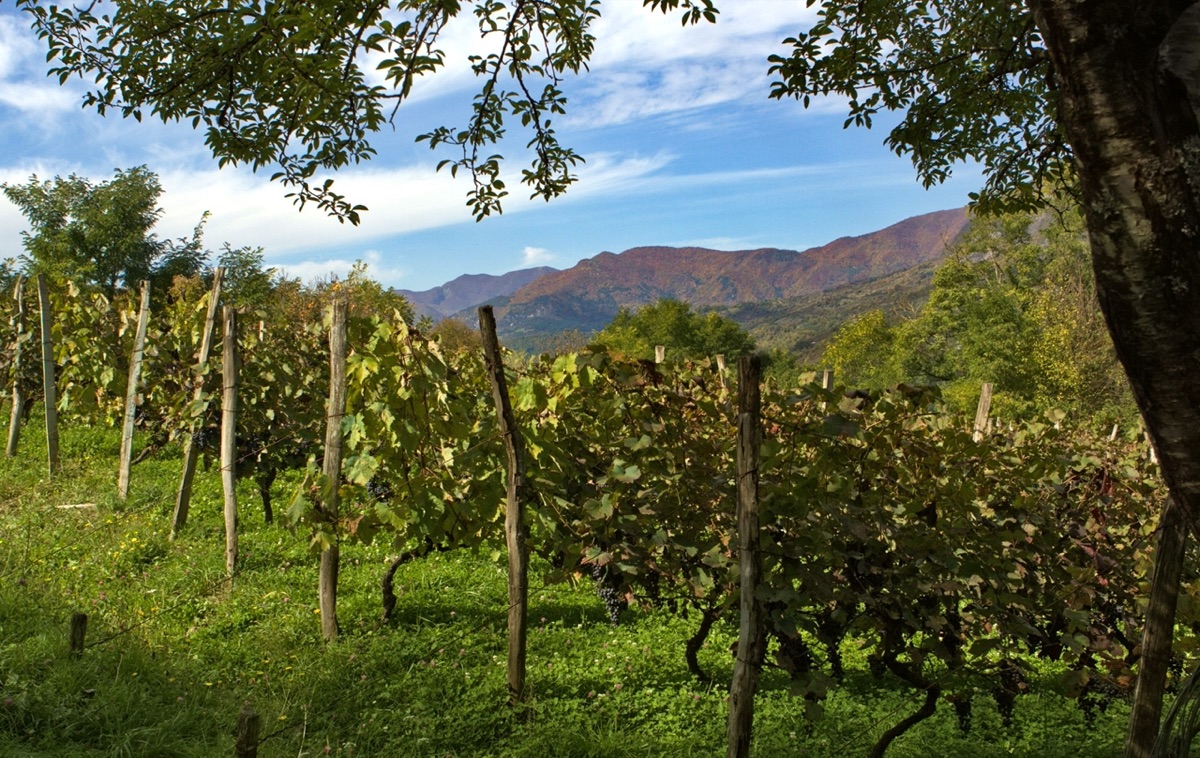
In antiquity Samegrelo belonged to the Kingdom of Colchis, and later to the Georgian kingdom. From the sixteenth to the middle of the nineteenth century it was an independent principality. In 1804 the ruling prince became a vassal of the Russian tsar. The principality was later abolished and annexed to the Russian Empire. Mingrelian culture, cuisine and identity are still very much alive. The inhabitants even have their own language, Mingrelian, and most are bilingual. The main towns are Zugdidi and the Port city of Poti.
The climate is humid and subtropical. Warm, moist air from the Black Sea cools against the forested mountain slopes, bringing plenty of rain. There are two zones: the flat Colchis lowland up to about 130 metres, and the higher river valleys further inland. Along the Tekhuri and Abasha rivers the flat land gives way to mountains with limestone rocks.
The soils are mainly krasnozem, a fertile, red, iron-rich soil high in humus. There are also loam, clay and calcareous clay soils. On the slopes and in the mountains the soil contains more limestone.
In the nineteenth century the fresh, lively red and white wines of Mingrelia were very popular. The vines traditionally grew up trees, often fruit trees, and could reach impressive heights. This heyday of Samegrelo wine was short-lived, however. Samegrelo was one of the first regions to be hit by fungal diseases and then by phylloxera.
Many indigenous varieties, such as Chvitiluri, were replaced by the American Isabella grape and other hybrids. Tsolikouri, Ojaleshi and Mtsvane did remain in the vineyards. Tsolikouri grew in popularity because it is more resistant to fungal disease. In Soviet times many vineyards made way for tea plantations and fruit trees, and much knowledge about the indigenous varieties and traditions was lost.
The traditional way of making wine is similar to that in neighbouring Guria. The wine is made in open-air cellars, in qvevri buried in the ground, which are called lagvani here. There are no large wineries making wine in Samegrelo, although larger producers do buy grapes from growers here. Small farmers often lack the means and the scale to bottle their own wine. On paper, with professional vineyard management and enough winemaking know-how, Samegrelo could regain its former reputation. A small group of enthusiasts is now taking the first steps.



 Orange wine (31)
  Fresh (98)
  Light (37)
  Rosé (16)
  Aromatic (20)
  Medium (96)
  Sparkling (28)
  Ripe (70)
  Full-bodied (99)