


Imereti, in western Georgia, is the country's second-largest and probably most varied wine region. Between the mountains of the Caucasus, vineyards lie at widely varying altitudes and on very different soils, in a humid climate tempered by the Black Sea. The wines are made in the churi, the local clay vessel, with shorter skin contact than in eastern Georgia, which gives lighter and fresher wines. White grapes such as Tsolikouri, Tsitska and Krakhuna set the tone. Although the region long stood in the shadow of Kakheti and winegrowing at many small producers is still developing, Imereti is one of the most promising wine regions in Georgia.
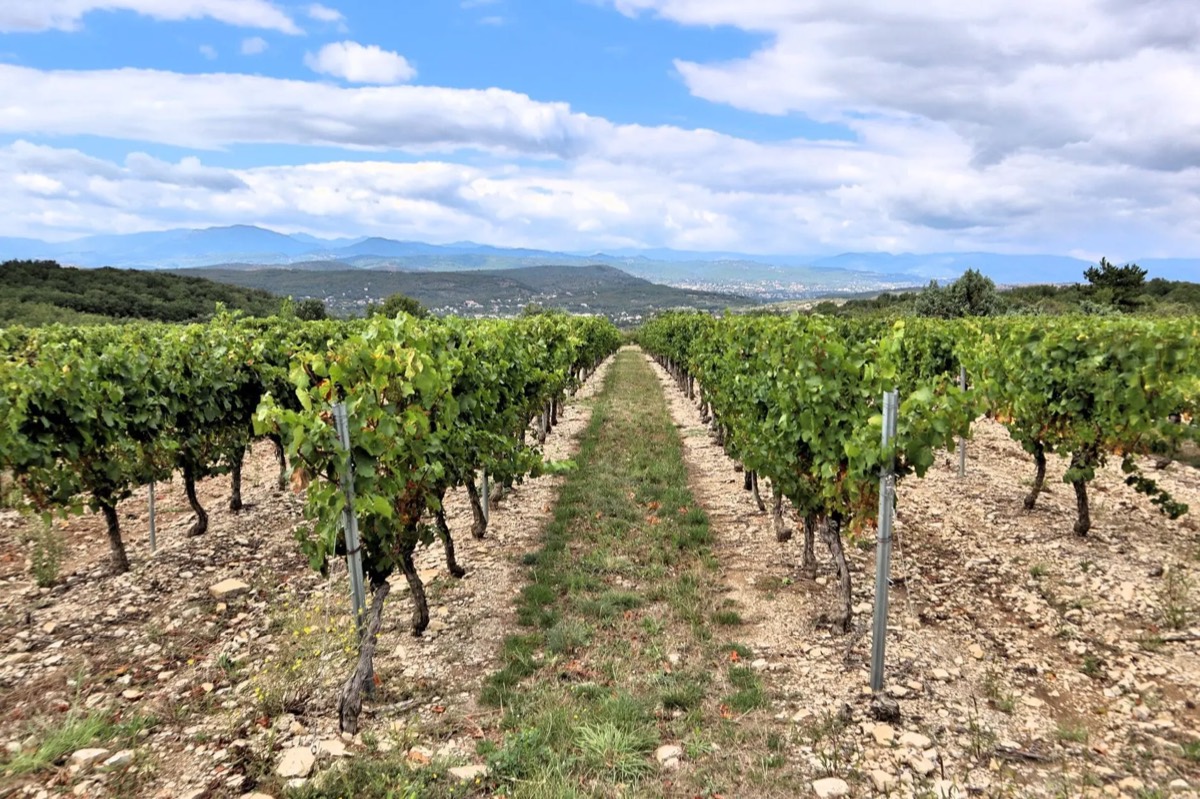
Around seventy per cent of Imereti consists of forested mountains. The vineyards are scattered across the region, in valleys, on foothills and on slopes between 80 and 800 metres above sea level. The region lies between the Greater and Lesser Caucasus, bounded by the Likhi Range to the east and the Meskheti Range to the south. To the west, Imereti borders Samegrelo.
In the 19th century Imereti was a trade route to the western ports. Wine was shipped abroad by train from Vartsikhe. Single-variety wines were rare; farmers blended red grapes such as Otskhanuri Sapere into light wines for extra colour. From the 1870s hybrid vines were planted against fungal diseases, but they may well have brought in phylloxera, which appeared in 1881. After the switch to American rootstocks, the Soviet regime favoured Krakhuna for Madeira-style wine and Tsolikouri and Tsitska for sparkling wine.
Imereti has a moderately humid climate: cooler and wetter than eastern Georgia, with mild winters and hot summers. The Black Sea moderates temperatures, allowing late-ripening grapes to ripen well. Climate change is bringing warmer winters with less snow but more rain. The soils are highly diverse, mainly volcanic bedrock, alongside sandstone and clay shale. In the east there are calcareous and yellow soils, in the west red soils and terra rossa. Most vineyards are on heavy clays rich in manganese, an important nutrient for the vine.
Here the qvevri is called churi. Unlike in Kakheti, few stems go into the churi and skin contact is limited to fermentation, so the wines are less heavy than elsewhere. The main white grapes are Tsolikouri, Tsitska and Krakhuna. Chinuri and Mtsvane are used for sparkling wine. Red grapes range from the powerful, tannic Otskhanuri Sapere to lighter varieties such as Dzelshavi, Ojaleshi and Aladasturi. Forgotten varieties such as Kundza and Mgaloblishvili are also getting renewed attention from winemakers.
Imereti has long been in the shadow of Kakheti. As early as 1898 it was noted that the grapes were good but the wine was made primitively. Today, too, winegrowing among small producers, often self-taught hobbyists, is still very much developing. There is certainly potential, as Imereti's grape varieties are among the most exciting in Georgia.



 Orange wine (27)
 Fresh (90)
 Light (36)
 Rosé (14)
 Aromatic (22)
 Medium (98)
 Sparkling (27)
 Ripe (71)
 Full-bodied (99)