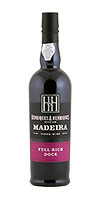
The Portuguese island of Madeira is located 600 km off the coast of Morocco. For centuries, they have been making the eponymous, oxidative wine here. Madeira is incomparable in taste and can be stored indefinitely. For those who want to buy Madeira, note that there are many different types and styles of taste.
The wine of Madeira owes its special character to the time when it was a supply point for English ships. On their way to America, these ships brought barrels of wine from the island, diluted with some brandy. They put them on the deck, in the burning sun. When the ships returned months later, the wine appeared to have undergone a special, interesting development in taste. The process of Madeira is still based on this discovery to this day.
The grapes are all taken to the lodges in the capital Funchal. There they are fermented in stainless steel tanks. The winemaker stops the fermentation early by adding alcohol. After this first step, he has the Vinho Claro, the base wine for every Madeira.
Then he lets the wine be maderized. The juice is placed in large concrete tanks for four to five months, which are kept at a temperature of 40°C to 50°C. This stewing of the wine is called Estufa. The best Madeiras stew for thirty years or even much longer, in wooden barrels in the hot attics of the lodges. When the wine has 'stewed', the winemaker slowly cools it down. He blends it with other barrels according to his own insight and adds some more alcohol.
Precisely because Madeira is 'used' to extreme conditions and contact with oxygen in this way, it can become very old. A good Madeira of 150 years old is still excellent to drink.
There are all kinds of Madeira, each with its own taste style. The grapes used are not unimportant. Five 'noble grape varieties' may be used: Sercial, Verdelho, Bual, Malvasia (corrupted to Malmsey in Madeira) and Terrantez. Madeiras from these grapes come in different styles. The Sercial and the Verdelho are usually the driest, the Bual a little sweeter and the Malmsey and the Terrantez the sweetest. The Terrantez is a rarity by the way. Only a few hectares have been planted with it.
There may be five 'noble grape varieties' on Madeira, 90% of the vineyards are planted with the qualitatively less interesting Tinta Negra Mole. This is therefore the majority of Madeiras are made from this. And although the Tinta Negra Mole may be a little less refined, beautiful wines are nevertheless made from it.
Madeira can be both (fairly) dry and sweet. From dry to sweet there are the following types: dry, medium dry, medium rich and fine rich. This is therefore completely independent of the grape variety from which the Madeira is made or the process used to make it. Madeiras can be made in different ways. You can deduce the process from the label
Very simple Madeira, often young, mainly intended for soup.
Semi-dry, at least three years old and made from at least 85% Verdelho.
Basic Madeira that has matured for at least three years. Made from Tinta Negra Mole. Usually an acceptable to good quality.
This is where it really starts to get interesting - also make it a bit more expensive. The Reserve has matured for five years in wooden barrels after the Estufa and is more complex than the Finest. Special Reserve has matured for at least ten years. Extra or Exclusive Reserve fifteen years. These Madeiras are also called Canteiros.
Made from one of the five noble grape varieties, from multiple harvest years.
Made from grapes from one harvest year but matures for a shorter period than Vintage Madeira. May state the harvest year on the bottle but with the term Colheita.
The Rolls Royce of Madeiras. Made from Sercial, Verdelho, Boal or Malmsey from one harvest year (which is of course put on the bottle). The Estufa has been aged for at least twenty years, but it could just as well be twice that. The Sercial is the driest of the Vintage Madeiras, the Verdelho and Boal are sweeter and the Malmsey is the sweetest. We currently have five wines from Madeira in our range. You can view all our wines from Madeira here.



 Orange wine (31)
  Fresh (98)
  Light (37)
  Rosé (16)
  Aromatic (20)
  Medium (96)
  Sparkling (28)
  Ripe (70)
  Full-bodied (99)