


Croatian wine was known throughout Europe at the end of the 19th century. Today, Croatian wine is on the rise again. This country is very interesting for adventurous wine drinkers. Because Croatian wine is made from grapes with exotic names such as Plavac Mali, Graševina, Crljenak, Teran and Pošip. Now that many winemakers have modernized their businesses, the future looks bright. The only problem: Croatians drink about as much wine as they produce, which means that exports are relatively limited.
Since the Greeks settled in present-day Croatia a few centuries before our era, wine has been produced in these regions. In the 19th century, Croatia was even one of the most important wine countries in Europe. The First World War put a brutal end to that.
The great potential of Croatian wine is mainly due to the good conditions and the many indigenous grape varieties. They grow in various Croatian wine regions that can be roughly divided into two zones, which differ considerably: the Croatian inland and the Adriatic coast.
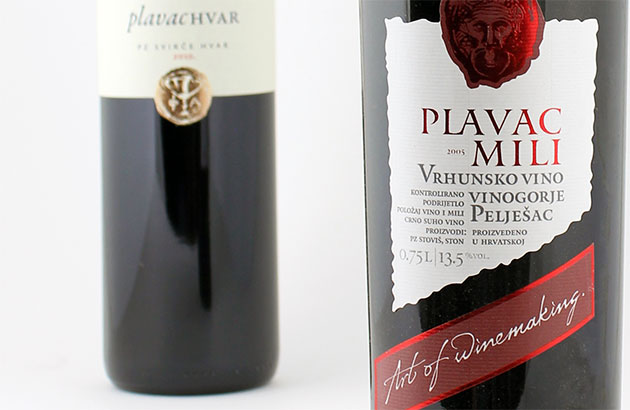
Croatia has several indigenous grapes from which wine is made. That gives the country a distinctive character. For red wines, the Plavac Mali is the most important. And who knew that the American Zinfandel is of Croatian origin. It still grows there, the Croatians call it Crljenak or Tribidrag. Red wines from the Babić and Teran (Refosco) may be worth a visit. For white wines, Croatians use grapes with exotic names such as Pošip and Bogdanuša, in addition to Graševina (Welschriesling) and Malvasia (which have been growing here for centuries).
Croatian wine is still very unknown in the Netherlands and hardly available. However, there has been a turnaround in recent years. Several Croatian winemakers have modernized their businesses. With advanced cellar equipment and well-managed vineyards. Some succeed in making Croatian wines of an excellent level, much better than many a sceptic would expect.
But there is still much to be done. Croatian wine has traditionally been made by small companies, often not large enough for the volume requirements set by large importers. Moreover, total production has fallen considerably, to less than a third of the heyday of just before the First World War. Croatian wine consumption is about the same as production, so as long as Croatians like to drink their own wine, there is little left for export.
Western Europeans on holiday on the Adriatic coast are happy to get to know Croatian wine and increasingly long for a bottle at home. Availability is still very limited, but will undoubtedly increase in the coming years.




 Orange wine (31)
 Fresh (95)
 Light (35)
 Rosé (17)
 Aromatic (21)
 Medium (99)
 Sparkling (32)
 Ripe (72)
 Full-bodied (95)