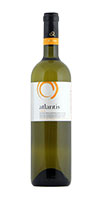
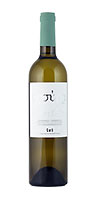
Wine is produced on many of the Greek islands in the Aegean Sea. The most important are Santorini, Samos, Limnos and Paros. Several of these so-called 'Cyclades' have volcanic soil. The hot wind blows over the islands. The winegrowers tie the vines together in low bunches to protect the grapes.

Santorini is home to the oldest vineyards in Greece that are still in use. Some have been in use for 300 years. Because Santorini is one of the few places in Europe that has never been reached by the phylloxera - which destroyed almost all European vineyards in the nineteenth century.
The soil of volcanic Santorini consists of lava, iron and ash. They are bone dry due to the fierce north wind. The winegrowers keep the vines low and make bunches of them to protect the grapes from the wind and the sun. The vines drink from the mist that passes over the island at night, but the yield of juice per hectare is very limited.
The most important grape variety on Santorini is the Assyrtiko, which produces beautiful white wines on Santorini: Mineral, sparkling fresh and with a fine, intense taste. In addition, the Athiri and Aïdani are planted on Santorini. Not only dry wines are made from Assyrtiko and Aidani, but also the sweet Vinsanto, because Santorini has a long tradition of sweet wines from dried grapes.
Red wines are also made on Santorini. They often have fresh acids and a lot of spice. The Mandelaria is a grape that is often used. And the Mavrotragano is a forgotten grape that has been used again for a few years to make very characteristic red wines.
There were already vineyards on Limnos in ancient times and there is even a grape named after this island: the Limnio, which the islanders themselves call Kalambaki. They still make a good red wine from it. But the white wines are in the majority. Especially the Muscat d'Alexandrie grape, which thrives in the poor, volcanic soil of Limnos.
Vineyards on narrow terraces can be found all over the island of Samos, from the sea up to 900 metres in altitude. They are kept cool by the strong north-easterly winds, which means that the winemakers here also have to prune heavily and keep the vines close to the ground. The island is almost entirely planted with Muscat à Petit Grains.
Just like on Samos, the vineyards of Paros are on narrow terraces. The climatic conditions are also similar. But on Paros, mainly blue grapes dominate. The Mandelaria grape is widely planted. This is also the most popular red variety of the Aegean Sea. In the highest vineyards of Paros, the winegrowers of Paros plant the local Monemvassia grape. Most wines from Paros are blends of both.
Wine has been produced on the island of Lesbos, near the Turkish coast, since ancient times. Homer already praised the wine from this island. The most striking wine from Lesbos is the Pramnian, an intensely sweet wine that is reminiscent of the Eszencia from the Hungarian Tokaj. Another reminder of Lesbos' very old wine history is the Chidiriotiko grape, which only occurs here and was threatened with extinction not so long ago. The Chidiriotiko was one of the most important grapes in Greek antiquity.
The vineyards of Myconos mainly grow Greek 'island grapes' such as Assyrtiko, Athiri, Monemvassia and Mandelaria, from which the winemakers press nice white, rosé and red wines. In recent years, wine growing has been experiencing a revival on Kos. The vineyards are planted with Greek varieties such as Athiri, Assyrtiko, Malagouzia and international varieties such as Chardonnay, Sauvignon Blanc, Merlot, Cabernet Sauvignon, Grenache, Syrah and Tempranillo. We currently have two wines from Cyclades in our range. You can view all our wines from Cyclades here.



 Orange wine (27)
 Fresh (92)
 Light (37)
 Rosé (10)
 Aromatic (22)
 Medium (96)
 Sparkling (23)
 Ripe (71)
 Full-bodied (99)