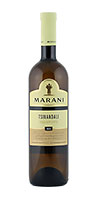
Tsinandali is regarded as the heart of winegrowing in Kakheti and is Georgia's best-known designation of origin (appellation) for dry white wine. It is home to the historic estate of the Chavchavadze family, several other restored estates and a large number of wineries, from big companies to small family cellars.
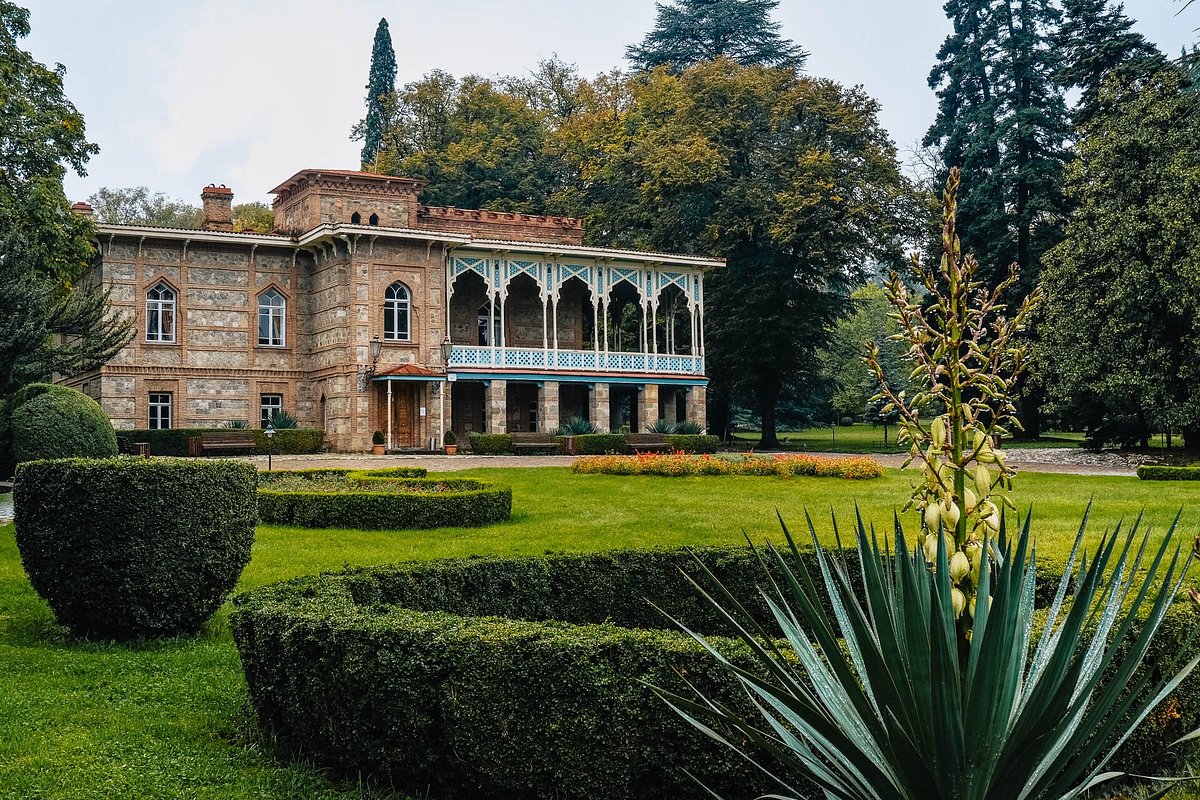
In the twentieth century Tsinandali became Georgia's most highly regarded dry white wine; the Soviets even gave it number 1 in their system of wine brands. The wine was created in the 1820s by Prince Aleksandre Chavchavadze, who wanted to make a wine in the style of a white Bordeaux, with some oak ageing. It was probably made largely from Mtsvane, supplemented with Rkatsiteli. The wine was aged for three years before release.
That style has largely been abandoned in favour of a simpler, more accessible wine. Today Tsinandali must be made from Rkatsiteli with at most 15 per cent Mtsvane. The wine is fermented in stainless steel tanks or barrels without skin contact, and may be aged in barrel. It is therefore explicitly not a qvevri or amber wine: Tsinandali is meant to be a dry, light, elegant wine in the European style, which may be released in the year after the harvest.
The designation of origin covers some 653 hectares on the right bank of the Alazani river, just south-east of the town of Telavi. The area runs from the Kisiskhevi to beyond the village of Akura and includes the villages of Tsinandali, Khodasheni and Kondoli. The vineyards lie both on the foothills of the Tsiv-Gombori range and on the valley floor.
Tsinandali's highest vineyards lie at 550 to 600 metres, above the road from Telavi to Gurjaani. The soil here is mostly humus-rich limestone, heavy loam and stony soil over limestone, planted with Saperavi, Rkatsiteli and Mtsvane. The middle section, at 500 to 560 metres, has very varied soils, from black earth to forest soil and stony river deposits. This is where most Tsinandali is grown; the wines are soft, fruity and medium-bodied. The lowest zone, below the railway line, has wetter, silty soil and is less suited to top wines. We currently have one wines from Tsinandali in our range. You can view all our wines from Tsinandali here.



 Orange wine (31)
  Fresh (98)
  Light (37)
  Rosé (16)
  Aromatic (20)
  Medium (96)
  Sparkling (28)
  Ripe (70)
  Full-bodied (99)