


Kartli is the wine region around the capital Tbilisi and the historic heart of Georgia. In terms of volume, Kartli is dwarfed by the large Kakheti region, but a lot of interesting things are happening here. Winemakers are rediscovering forgotten indigenous grapes, neglected vineyards are getting a second life, and newcomers from Georgia and abroad are bringing fresh ideas.
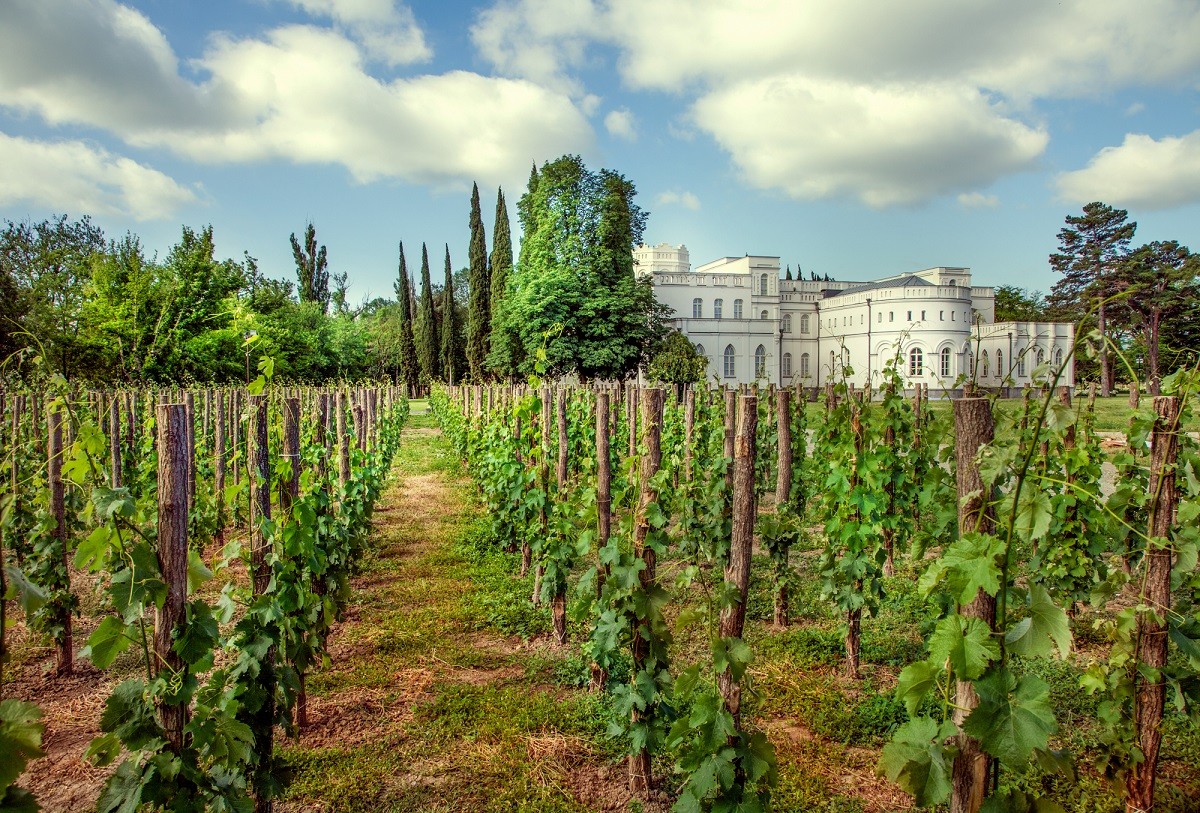
Kartli is a region of contrasts: from historic castles to small family cellars, and from neglected Soviet vineyards to carefully restored plots with centuries-old grape varieties. For anyone who wants to discover Georgian wine beyond the well-known Kakheti, Kartli is one of the most exciting regions in the country.
In classical antiquity, Kartli was known as the Kingdom of Iberia, which could be seen as the forerunner of present-day Georgia. In the third century BC, the king at the time made the city of Mtskheta, just north of Tbilisi, his capital. He steadily expanded his territory, and over time more and more Georgian tribes joined. This unification continued after Georgia became Christian in 337.
In the sixth century the capital moved to Tbilisi, which was then occupied for centuries by Persians, Arabs and Turks. In 1122 King David IV recaptured the city. He made Tbilisi the capital of the unified kingdom, and ever since Kartli has been the political centre of Georgia.
Kartli's soil contains seashells and fossils, remnants of an ancient sea. The subsoil consists of sandstone, clay, loam and calcareous layers, with the typical reddish-brown, cinnamon-coloured soils in many places. The climate is drier than in Kakheti. Many vineyards are farmed without irrigation.
In Soviet times, Kartli mainly supplied grapes for sparkling and light wines. Quality was not a concern: the rows were planted far apart for tractors, and the aim was maximum volume. Many of the vineyards of that era were abandoned after the fall of the Berlin Wall. For the past few years, a growing number of winegrowers have been taking over old plots, pruning the vines hard and restoring the vineyards.
The main white grapes are Chinuri and Goruli Mtsvane. There is also renewed interest in red varieties such as Tavkveri and Shavkapito. Long undervalued, they now form the basis of remarkably good wines. Some winemakers are also experimenting with grapes from western Georgia. Kartli has two protected designations of origin (appellations): Bolnisi in the south and Ateni in the north-west.
The region is divided into three parts: Kvemo (‘Lower’) Kartli south of Tbilisi, Mtskheta-Mtianeti north of the capital and Shida (‘Inner’) Kartli to the north-west of it.
The most important area in Kvemo Kartli is Bolnisi, known for its yellow tuff, from which many monumental buildings in Tbilisi were built. Swabian settlers came here in the nineteenth century and named the place Katharinenfeld. They made wine from European and Georgian grapes, including a sparkling wine, and founded a cooperative in 1908.
Under Stalin, these Germans were deported to Siberia and Central Asia. In 1944 the town was renamed Bolnisi again. But traces of the German past can still be seen, and tasted, in the local smoked meat speciality.
In recent years the number of small producers in Bolnisi has grown rapidly, from two in 2015 to twenty-five in 2018. They are often enthusiastic amateurs who make use of government support. The designation of origin, recognised in 2019, covers the town and the surrounding villages.
The vineyards lie on both banks of the Mashavera river, at 500 to 800 metres. In the west the soil is volcanic, in the east there is limestone and sandstone, and closer to the river alluvial soil. Rkatsiteli, Chinuri and Goruli Mtsvane are the main white grapes, while Saperavi dominates the reds. The best wines have fine, chalky tannins and a pronounced mineral character. Some winemakers have planted German varieties, because these were also grown here when the Swabians still lived in the area.
The broad valley north-west of Tbilisi, along the motorway to Gori, was once home to vast collective vineyards. A few winegrowers are bringing old plots of Chinuri and Tavkveri back to life. The Chinuri from this area is rich, spicy and expressive.
In the village of Chardakhi, it was above all winemaker Iago Bitarishvili who put the area on the map. In the difficult 1990s his family bartered grapes for firewood and meat. Iago nevertheless decided to focus on the vineyard and has farmed organically since 1998. In 2003 he bottled his first natural wine, and in 2005 his winery became the first in Georgia to be certified organic. Bitarishvili makes all his wines in qvevri, mainly from Chinuri from sixty-year-old vines.
A little further on lies Okami, with rolling slopes that experts consider ideal for still wines. Chinuri, Goruli Mtsvane, Shavkapito and Tavkveri are the main varieties planted here. The region's best-known winery is Château Mukhrani. For centuries the estate belonged to a branch of the royal Bagrationi family. In 1875 Prince Ivane Mukhranbatoni travelled to Bordeaux and decided to make similar wines on his own estate. He planted Georgian and French grapes, built a modern winery and from 1887 had a French-style château built.
The wines were supplied to the Russian imperial court and won prizes, including in Paris. After his death in 1895 the estate fell into decline, and in the 1990s it even served as a base for armed gangs. Investors have since fully restored the château and winery. Mukhrani now makes modern quality wines.
South of the Mtkvari, close to the town of Gori (Stalin's birthplace), lies the Ateni appellation. The vineyards are at 620 to 750 metres, planted mainly with Chinuri and Goruli Mtsvane. Ateni is known for Atenuri, a naturally sparkling white wine. Traditionally it was made in qvevri that were sealed before fermentation had finished. In Soviet times the wine was produced in large quantities and with less care. By 2015 no commercial winery was making it any more. A few small producers are now trying to revive the style. We currently have eleven wines from Kartli in our range. You can view all our wines from Kartli here.



 Orange wine (27)
 Fresh (90)
 Light (36)
 Rosé (14)
 Aromatic (22)
 Medium (98)
 Sparkling (27)
 Ripe (71)
 Full-bodied (99)


